Amazon Expands Same-Day Fresh Grocery Delivery in the UK: What It Means for FMCG Brands and Retail Suppliers
Published: June 2026 | Category: Retail Intelligence | Reading time: 12 min
Author: Growsights Editorial | Growsights Retail Growth Intelligence
What Amazon Actually Announced
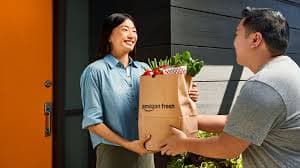
On 4 June 2026, Amazon announced a significant expansion of its UK grocery offering. Shoppers in parts of central and east London can now add fresh fruit and vegetables, meat, poultry, seafood, dairy, bread, eggs, and frozen foods to same-day delivery orders — in the same basket as electronics, fashion, household goods, and every other product category on Amazon.co.uk.
The announcement was made at Amazon's "Delivering the Future" event held at its Dartford fulfilment centre. The key details:
- Same-day fresh delivery is live now in eligible postcodes across central and east London
- Amazon Now — a separate ultra-fast tier promising delivery in under 30 minutes — is also being rolled out in the UK
- Prime members pay no additional delivery fee on fresh grocery orders over £20
- Expansion to additional UK postcodes and regions is planned across the coming months
- 25+ sub-same-day delivery sites across Europe are planned for 2026, with the UK and Germany as priority markets
This is not Amazon's first attempt at UK grocery. The company opened Amazon Fresh standalone stores, but closed them in 2022 following poor performance. This expansion is different — it integrates fresh groceries into Amazon's existing same-day logistics network rather than operating separate physical stores.
"A customer ordering headphones, a phone charger, nappies, or a children's book can now add bananas, milk, eggs, chicken and more to a single order — and have it all arrive at their door within hours." — Amazon UK, June 2026
The implication for UK retailers and suppliers is not incremental. It is structural. Amazon is attempting to become the default combined-category shopping destination — not a specialist grocery player, but a platform where grocery sits alongside everything else a household buys.
The UK Online Grocery Landscape: Who Holds the Ground
Before assessing Amazon's move, it is worth understanding the market it is entering.
Overall Grocery Market Share (Great Britain, early 2026)
Based on Kantar Worldpanel 12-week data to early 2026, the UK grocery market stands at approximately £235 billion annually. The current share breakdown:
UK Grocery Market Share — Great Britain 2026 (Kantar Worldpanel)
━━━━━━━━━━━━━━━━━━━━━━━━━━━━━━━━━━━━━━━━━━━━━━━━━━━━━━━━━━━━
Retailer          Share      Direction
━━━━━━━━━━━━━━━━━━━━━━━━━━━━━━━━━━━━━━━━━━━━━━━━━━━━━━━━━━━━
Tesco             27.3%      Holding / slight gain
Sainsbury's       15.1%      Stable
Asda              13.7%      Declining
Aldi              10.2%      Growing
Morrisons          9.2%      Stable
Lidl               8.1%      Growing
Waitrose           4.4%      Stable
M&S Food           4.1%      Growing
Co-op              3.9%      Stable
Ocado              1.8%      Growing (online-only)
━━━━━━━━━━━━━━━━━━━━━━━━━━━━━━━━━━━━━━━━━━━━━━━━━━━━━━━━━━━━
Online Grocery Share
Approximately 10% of all UK food retail sales are made online as of December 2025 — down from the pandemic peak of 12% but stable. Tesco holds roughly 37% of the UK online grocery market. Asda leads by total online GMV (approximately $5.42 billion in 2025 eCommerce net sales), with Sainsbury's close behind at $4.61 billion.
UK Quick Commerce Market
The UK quick commerce market — covering same-day and sub-hour grocery delivery — is forecast to grow at 10.1% annually to 2030. The total UK market is projected to reach $4.71 trillion by 2029. This is the segment Amazon is now directly entering.
Competitor Comparison: Amazon vs Tesco Whoosh vs Ocado Zoom vs Sainsbury's
The Competitive Landscape at a Glance
UK Same-Day Grocery Delivery — Competitor Matrix (June 2026)
━━━━━━━━━━━━━━━━━━━━━━━━━━━━━━━━━━━━━━━━━━━━━━━━━━━━━━━━━━━━━━━━━━━━━━━━━━━
Player           Speed          Model              Supplier Access    Coverage
━━━━━━━━━━━━━━━━━━━━━━━━━━━━━━━━━━━━━━━━━━━━━━━━━━━━━━━━━━━━━━━━━━━━━━━━━━━
Tesco Whoosh     20 minutes     Store-to-door      Tesco range        National (expanding)
Amazon Same-Day  Same-day       Fulfilment centre  Amazon brands +    Central/East London
                                                   third-party        (expanding)
Amazon Now       Under 30 min   Micro-fulfilment   Curated range      London (testing)
Ocado Zoom       Under 60 min   Dark-store         Ocado range        Select UK cities
Asda Express     Under 60 min   Store-based        Asda range         Select postcodes
Morrisons Now    Under 60 min   Deliveroo partner  Morrisons range    Select areas
Co-op Rapid      Under 30 min   Multi-platform     Co-op range        Urban UK
━━━━━━━━━━━━━━━━━━━━━━━━━━━━━━━━━━━━━━━━━━━━━━━━━━━━━━━━━━━━━━━━━━━━━━━━━━━
Tesco Whoosh: The Current Leader
Tesco is the player with the clearest structural advantage in rapid grocery delivery. Whoosh operates store-to-door in as little as 20 minutes and has added over 250,000 new users, contributing to an 11.2% uplift in Tesco's total online sales in the 19 weeks to January 2026. Tesco holds approximately 37% of the UK online grocery market — no other player is close.
The key competitive edge is infrastructure: Tesco has over 2,700 UK stores that double as local fulfilment hubs. No dark-store network required. No separate logistics investment at scale. Amazon cannot replicate this without years of capital expenditure.
"We have been able to grow the service quickly using our existing stores and seamlessly integrate Whoosh into our overall offering." — Rob Graham, Tesco Online Director
Ocado Zoom and the Platform Play
Ocado operates Zoom, its own sub-hour delivery service, from dark stores. The more significant strategic development, covered in the Asda–Ocado platform deal analysis on the Growsights blog, is that Ocado's Smart Platform is now powering Ocado.com, Morrisons online operations, and from 2027, Asda's entire eCommerce infrastructure. This makes Ocado the infrastructure layer behind a significant share of UK online grocery — a different competitive position than simply running a delivery service.
Sainsbury's: Consolidation Over Speed
Sainsbury's recently shut down its standalone Chop Chop rapid delivery service, integrating rapid delivery into the main Sainsbury's app instead. The rationale, as articulated by Sainsbury's Head of Experience Design, was reducing friction: one app for the weekly shop, one app for same-day delivery. Sainsbury's continues to operate through Deliveroo and Uber Eats partnerships for ultra-fast fulfilment.
The Amazon Difference: Category Convergence
What makes Amazon's move structurally different from all the above is not speed — it is basket convergence. A Tesco Whoosh order is a grocery order. An Amazon same-day order can contain fresh groceries alongside a phone charger, children's books, and a kitchen appliance. This is the bundle play that no UK supermarket can currently replicate.
For FMCG brands, the question is not just about grocery delivery speed. It is about where the shopper's basket is being assembled — and whether your product is in it.
What This Means for FMCG Brands Supplying into UK Retail
Amazon's same-day grocery expansion does not replace Tesco or Sainsbury's as primary distribution channels for UK FMCG brands. But it creates three specific pressures that mid-market brands (£5M–£50M revenue) should be thinking about now.
1. A New Channel Requires a New Data Layer
Amazon as a grocery channel behaves differently from a traditional Big Four retailer relationship. Brands supplying through Amazon Vendor Central or Amazon Seller Central operate in a fundamentally different data environment to their Tesco or Sainsbury's portal. Inventory reporting, availability tracking, and replenishment signals all work differently.
For brands already managing 4–6 data sources every Monday morning — Tesco portal, Sainsbury's CSV, Cin7, distributor spreadsheet, 3PL report — adding Amazon as a live grocery channel without a unified data layer creates the kind of fragmentation that leads to missed stockouts and invisible margin leaks.
This is exactly the problem that retail growth intelligence platforms are built to solve: connecting disparate data sources into a single decision environment.
2. Promotional and Seasonal Replenishment Windows Compress
Same-day grocery delivery fundamentally compresses the replenishment window. A traditional weekly grocery shop with a 2-day delivery slot gives the supply chain team time to reconcile and react. A same-day order fulfilled from a local hub requires the right inventory to be in the right location today — not in 48 hours.
For brands running promotional activity through Amazon (Vine, Lightning Deals, Sponsored Products), this compression is particularly acute. A promotional spike in demand on a same-day-capable product needs to be anticipated in the fulfilment centre inventory, not just in the warehouse. Brands that rely on post-promotion reporting rather than real-time signal monitoring will consistently find themselves understocked during peak promotional windows.
3. The Data Visibility Gap Between Channels Widens
As Amazon adds grocery to its same-day offering, the gap between what a brand knows about its Tesco performance and what it knows about its Amazon performance is likely to widen. Tesco, Sainsbury's, and Asda all provide supplier portal access with (varying degrees of) availability and sales data. Amazon's Vendor/Seller Central data is structured differently, with less granularity at the depot-regional level that Big Four portals provide.
A brand with 60% of its online grocery revenue through Tesco and a growing tail through Amazon needs to be able to read both data environments with equal clarity. Without that, the Amazon channel becomes a black box — growing in importance but invisible in terms of operational intelligence.
Understanding how to build that unified view is at the core of what Growsights covers in its retail analytics approach for mid-market FMCG brands.
The Data and Replenishment Challenge Nobody Is Talking About
The coverage of Amazon's UK same-day grocery launch has focused on the consumer story: faster delivery, bigger baskets, convenience. The supplier story is largely absent from the conversation.
Here is what matters for a brand operating in this environment.
The Shelf-Stable vs Perishable Performance Gap
NielsenIQ Omnishopper Panel data from the US — where Amazon same-day perishable delivery has been live for six months — shows a clear pattern. Amazon's grocery business remains heavily skewed toward shelf-stable categories. Most Amazon grocery trips are shelf-stable only. Perishable baskets are growing but start from a low base.
This has a direct implication for UK FMCG brands. In the near term, same-day fresh delivery is most likely to benefit ambient and shelf-stable FMCG brands over fresh and chilled ones. Brands in categories like tea, coffee, biscuits, household essentials, and baby products — which Amazon already identifies as among its most frequently purchased UK grocery items — are best positioned to benefit immediately.
Chilled and fresh brand suppliers face an additional layer: the fulfilment infrastructure for temperature-controlled same-day delivery is more demanding than ambient. Amazon's Dartford facility and its planned 25+ sub-same-day European sites will need to demonstrate cold-chain reliability before major chilled FMCG brands will shift meaningful volume through the channel.
The Replenishment Signal Problem
The most underappreciated operational challenge of same-day grocery delivery is what it does to replenishment signal timing. In a traditional 2-day or next-day grocery delivery model, a brand can monitor depletion at a Tesco depot and react within a standard planning cycle. In a same-day model, depletion-to-stockout happens in hours, not days.
For brands operating with standard weekly planning cycles and Monday morning data reconciliation processes, this creates a structural mismatch. The data frequency they have does not match the operational speed the channel demands.
This is not a technology problem — it is a data architecture and decision frequency problem. Brands that solve it with inventory intelligence systems rather than by adding headcount will have a structural cost advantage over those that do not.
AI Insights: What the Signals Are Telling Us
The Growsights intelligence layer identifies three signals in this Amazon expansion that mid-market UK FMCG brands should monitor through the second half of 2026.
Signal 1 — Channel Concentration Risk is Increasing
As Amazon grows its UK grocery presence, brands that have concentrated their eCommerce volumes in a single retailer (typically Tesco or Ocado) face increasing exposure. Not because Amazon will immediately take significant share from those retailers, but because buyer expectations around same-day availability are being reset by Amazon at the platform level. Once consumers expect same-day delivery as a baseline, every retailer's supplier performance standards will shift accordingly.
Signal 2 — The Mixed-Basket Effect Will Reshape Promotional Planning
Amazon's basket convergence model — groceries alongside electronics, fashion, and essentials — means promotional triggers for grocery products on Amazon will increasingly be influenced by non-grocery purchase behaviour. A consumer buying a new coffee machine is now more likely to add coffee pods to the same basket. Brands in categories adjacent to high-frequency Amazon purchases should be modelling this cross-category promotional effect, not just category-level demand signals.
Signal 3 — Supplier Data Environments Are Fragmenting Faster Than Planning Cycles Are Adapting
The operational tempo of UK online grocery is accelerating across every channel simultaneously. Tesco Whoosh is growing. Asda is migrating its platform. Sainsbury's is consolidating its rapid delivery infrastructure. Amazon is entering fresh grocery. Each of these creates a change to the data environment that brands navigate using supplier portals. For brands managing five or more retailer relationships, the cognitive and operational load of keeping up with these simultaneous changes is already at or beyond the capacity of standard supply planning teams.
"The brands that will win in this environment are not the ones with the most sophisticated dashboards. They are the ones who have closed the gap between the data signal and the action that follows it." — Growsights, June 2026
This is the Analytics does not equal Action problem at its most acute. More data is being generated across more channels. The teams responsible for acting on it have not grown. The solution is not more reporting. It is better decision architecture — understanding how retail growth intelligence platforms help mid-market brands close the gap.
Key Questions for Supply Chain and Commercial Teams
The following questions are designed for supply planning managers, commercial directors, and eCommerce leads at UK FMCG brands. They reflect the operational implications of Amazon's same-day grocery expansion.
For supply chain leads:
- Do you have depot-level availability visibility across all five of your major UK retailer relationships, or only national averages?
- How quickly does a depletion signal at a London-based Tesco or Asda depot translate into a PO in your system? Would that latency window create a stockout in a same-day fulfilment environment?
- Are your promotional planning cycles built around daily data or weekly data? Which channels would be under-served by a weekly cycle if same-day delivery grows as a proportion of volume?
For commercial and eCommerce leads:
- Is Amazon currently in your UK channel mix? If not, what is the threshold of same-day grocery penetration that would make it a relevant channel for your category?
- Are you monitoring Amazon search rank and availability for your SKUs alongside your Big Four portal data? If these live in separate reporting environments, which team owns the consolidated view?
- How does your promotional calendar align with Amazon's deal mechanics (Lightning Deals, Subscribe and Save, Vine)? Are these being planned alongside Tesco Promotional Periods, or treated as separate activities?
For founders and MDs:
- When the Asda–Ocado platform migration goes live in 2027, and Amazon same-day is operational across more UK regions, how many different data environments will your planning team be reconciling on a Monday morning?
- Is your current commercial and supply chain structure set up to operate at the speed these channels now require — or was it designed for a slower, more predictable weekly planning cycle?
Frequently Asked Questions
What is Amazon Same-Day Fresh Grocery Delivery in the UK?
Amazon Same-Day Fresh Grocery Delivery is a service allowing customers in eligible UK postcodes to add fresh groceries — including fruit, vegetables, meat, dairy, eggs, bread, and frozen foods — to the same delivery order as other Amazon products, with delivery arriving within hours. It launched in central and east London in June 2026, with expansion to other UK areas planned.
How is Amazon Same-Day different from Amazon Fresh?
Amazon Fresh was a standalone grocery proposition that included physical stores (now closed) and a separate grocery delivery service. The new same-day fresh delivery integrates groceries directly into the standard Amazon.co.uk shopping experience — the same basket, the same app, the same checkout — rather than operating as a separate brand or service.
What is Amazon Now in the UK?
Amazon Now is a separate service tier sitting above standard same-day delivery, promising delivery of groceries and household essentials in under 30 minutes from a network of micro-fulfilment centres. It was announced in May 2026 and is currently being tested in the UK alongside existing deployments in India, Mexico, and the UAE.
Does Amazon Same-Day delivery affect how FMCG brands should manage inventory?
Yes. Brands supplying through Amazon face different inventory and replenishment dynamics compared to traditional Big Four retailer relationships. Same-day fulfilment compresses the time between a depletion signal and a potential stockout from days to hours. Brands operating on weekly planning cycles need to assess whether their current data frequency is sufficient to manage inventory across fast-moving online channels.
How does Amazon compare to Tesco Whoosh for rapid grocery delivery?
Tesco Whoosh is currently the leading rapid grocery delivery service in the UK by customer reach and operational scale, operating from over 2,700 UK stores with delivery in as little as 20 minutes. Amazon's advantage is different — it offers a combined grocery and non-grocery basket in a single same-day delivery, which no supermarket can currently replicate. The two services target slightly different shopper occasions and are not direct substitutes.
Will Amazon same-day grocery delivery work for chilled and fresh products?
Early evidence from the US (where Amazon same-day perishable delivery has been operating for six months) suggests that shelf-stable and refrigerated packaged goods outperform fresh categories on the Amazon channel. Temperature-controlled same-day delivery requires significant fulfilment infrastructure investment. Amazon's UK expansion will likely perform strongest in ambient and chilled packaged categories before fresh produce at scale.
How should FMCG brands respond to Amazon's grocery expansion?
Brands should first assess their current channel mix and determine whether Amazon is already a relevant distribution channel. If so, the priority is ensuring Amazon Vendor/Seller Central data is integrated into the same operational picture as Big Four portal data — not managed as a separate reporting environment. If Amazon is not yet a channel, the expansion provides a useful moment to assess whether same-day delivery capability could be accessed through Amazon at lower infrastructure cost than building it through individual retailer relationships.
What is the UK quick commerce market expected to be worth?
The UK quick commerce market is forecast to grow at 10.1% annually to 2030. The global quick commerce market is projected to reach $4.71 trillion by 2029, with the UK and Germany as two of the primary growth markets.
Is Amazon's UK grocery expansion a threat to Tesco and Sainsbury's?
In the short term, Amazon is unlikely to take significant grocery market share from the Big Four. The structural advantages of store-based grocery retailers — proximity, range, trust, loyalty programmes — are difficult to replicate quickly. The more significant medium-term threat is basket share: as Amazon makes grocery increasingly convenient to purchase alongside non-grocery items, it increases the proportion of household spending routed through Amazon rather than through a single-purpose grocery shop.
What is a retail growth intelligence platform, and why is it relevant here?
A retail growth intelligence platform — like the solution described on the Growsights website — connects data from multiple retailer portals, inventory management systems, and logistics providers into a single operational view. For FMCG brands managing relationships across Tesco, Sainsbury's, Asda, Amazon, and Ocado simultaneously, this kind of unified intelligence layer is what prevents the data fragmentation that leads to missed stockouts, delayed replenishment, and invisible margin leaks.
Summary: The Action Agenda
Amazon's same-day fresh grocery expansion in the UK is a consumer convenience story in the headlines. Underneath it is a structural shift in how online grocery channels are operating — and how demanding they are becoming for the brands supplying into them.
The key takeaways for UK FMCG brands:
Near-term (next 90 days)
- Assess your current Amazon channel position and whether same-day grocery creates a new distribution opportunity or a new competitive threat to existing retail partners
- Audit your current data frequency — if you are running on weekly reconciliation cycles, identify which channels would create blind spots in a same-day operational environment
- Map your promotional calendar against Amazon deal mechanics to identify whether cross-category basket effects could generate demand spikes your current supply planning cycle cannot anticipate
Medium-term (6–12 months)
- Build a unified data view across all active retailer relationships — Big Four portals, Amazon Vendor/Seller Central, and any rapid delivery platform partnerships — rather than managing them in separate operational environments
- Prepare your supply chain team for the data environment changes coming from the Asda–Ocado platform migration in 2027 alongside Amazon's continuing UK expansion
- Model replenishment latency across channels: understand how long a depletion-to-PO cycle takes in each retailer relationship and whether that cycle is compatible with same-day demand volatility
The underlying principle
Data is not the problem. Every retailer portal, every Amazon dashboard, every 3PL report is generating more data than most mid-market planning teams can act on. The gap is between the signal and the decision that follows. That gap — the analytics-to-action gap — is where mid-market FMCG brands lose margin, miss availability windows, and fall behind competitors who have closed it.
Understanding how to close that gap in a multi-channel, same-day retail environment is what Growsights is built to do.
About Growsights
Growsights is a retail growth intelligence platform built for UK and US mid-market FMCG and D2C brands generating £5M–£50M in revenue. Growsights connects supplier portals, inventory systems, and retailer data into a single decision engine — delivering the action layer that transforms operational data into commercial decisions.
Growsights is currently running a free 30-day Inventory Audit for UK FMCG brands. Brands share portal exports and system access. Growsights connects everything, identifies hidden gaps, and delivers a written report. Most brands find something in Week 1.
To find out more, visit growsights.co.uk.
This article was produced by the Growsights editorial team. All market share data is sourced from Kantar Worldpanel (2026). Quick commerce market projections are sourced from published industry research (April 2026). Amazon service details are sourced from Amazon UK official announcements (June 2026).