How UK Retailers Are Driving Productivity Gains Amid Rising Labour & Operating Costs
The bill is real. So is the comeback. Here's what's actually working -- and who's being left behind.
UK retail employment just hit its lowest level on record. Wages cost more than ever. National Insurance bills went up. And yet, in the second quarter of 2026, physical stores across the country reached record productivity -- £61.92 in sales per occupied square foot, a 23% rise from late 2019. That's not a contradiction. That's the story of what happens when an entire sector is forced to do more with less.
The word "productivity" gets thrown around a lot in retail circles. Usually it's abstract. Not right now. For the UK's retail operators, productivity isn't a KPI to put on a dashboard. It's a survival mechanism -- the gap between a viable business and one haemorrhaging margin on a wage bill that rose by £6.5 billion over 14 months.
This piece unpacks what's driving the gains, which strategies are actually working, and what mid-market retailers with £5m-£50m in revenue can realistically implement without a hyperscaler budget.
1. The State of UK Retail Productivity in 2026: The Data Is Better Than You Think
Let's start with something that almost nobody is saying out loud: UK retail productivity is improving, and it may have been improving more than official figures suggested for years.
New analysis from the Resolution Foundation -- published in August 2026 -- found that UK productivity has grown by an average of 1.1% a year over the two years to June 2026. That's a sharp reversal from the 0.7% annual decline seen in the two years before. More importantly for retailers, the gains are broad-based. Retail was among 12 of 19 industries to record positive productivity growth -- alongside communications, science, and healthcare.
The ONS's own payroll-based Real Time Information (RTI) data -- which it now considers more reliable than its Labour Force Survey (LFS) -- shows output per hour was 0.7% higher year-on-year in Q2 2026, compared with a 0.2% decline under the older LFS measure. Output per worker increased 1.4%.
"The recovery had been achieved by broadly the same workers, doing the same jobs, and working in the same sectors." -- Simon Pittaway, Senior Economist, Resolution Foundation, August 2026
That matters because it rules out the easy explanation: that retail's numbers look better only because low-productivity jobs have disappeared. The sector isn't cleaning up the data by eliminating roles. It's generating more output from the people who remain.
Store-level data tells the same story from a different angle. According to CoStar analysis of ONS retail sales figures, total store sales in Q2 2026 reached £105.3bn (excluding fuel and online) -- up 9% from £97bn in late 2019. Crucially, occupied retail space stayed flat over the same period at 1.7 billion square feet. That means every square foot is working harder.
UK Retail Productivity: Key Indicators 2024-2026
| Metric | 2024 | Q1 2026 | Q2 2026 | Direction |
|---|---|---|---|---|
| Output per hour (YoY, RTI basis) | -0.2% | +0.4% | +0.7% | Improving |
| Output per worker (YoY) | -0.5% | Flat | +1.4% | Improving |
| Sales per sq ft (excl. fuel/online) | ~£54 | ~£59 | £61.92 | Record high |
| Total store sales (Q, excl. fuel) | £99bn | £102bn | £105.3bn | Rising |
| Occupied retail floorspace | 1.7bn sq ft | 1.7bn sq ft | 1.7bn sq ft | Flat |
| Retail employment | 2.85m | 2.79m | 2.76m (Mar) | Declining |
Sources: ONS, Resolution Foundation, CoStar/Retail Sector, BRC, August 2026
The productivity recovery is real. But it wasn't free. It came at a cost -- to employment, to investment cycles, and in some cases to service quality. Understanding what drove it is the more important question.
2. The Squeeze: Why Labour Costs Are Structurally Different Now
Before getting into solutions, it's worth being precise about the scale of the problem. Because this isn't a normal wage-cost cycle where a percentage point or two on payroll needs to be absorbed. This is structural.
Three things hit at once.
National Living Wage: From April 2026, the NLW rose to £12.71 per hour, up 50p. The National Minimum Wage for 18-to-20-year-olds jumped by 85p to £10.85 -- a larger-than-expected increase that trade bodies warned would accelerate youth unemployment. The Association of Convenience Stores predicted the most common responses would be lower profits, higher prices, and reduced staff hours.
Employer National Insurance: The Autumn Budget 2024 raised the employer NIC rate from 13.8% to 15%, while simultaneously cutting the secondary threshold from £9,100 to £5,000 per annum. That second change is the one that really stings. It brought part-time workers -- the backbone of retail staffing -- into NIC liability for the first time. A retailer with 200 part-time workers at 20 hours a week didn't just see a 1.2-point rise in the NIC rate. It saw an entirely new NIC obligation on workers it had never previously paid contributions for.
The combined effect: The BRC calculates that the cost of employing a full-time entry-level retail worker rose by 10% as a result. For a part-time worker -- the more common profile across fashion, grocery convenience, and beauty retail -- the increase was over 13%. In total, the sector absorbed an additional £6.5 billion in employment costs over a 14-month window.
Key insight for retail leaders: You cannot cost-cut your way out of a structural cost increase. If your wages went up 13% and your operational model is the same, you haven't adapted. You've just absorbed it.
Breakdown of the NLW and NIC Cost Impact (per full-time retail worker)
| Cost Component | Pre-Budget Rate | Post-Budget Rate | Change |
|---|---|---|---|
| NLW hourly rate | £11.44 | £12.71 | +£1.27/hr |
| Employer NIC rate | 13.8% | 15.0% | +1.2pp |
| NIC secondary threshold | £9,100/yr | £5,000/yr | -£4,100 |
| Estimated total employment cost uplift | -- | -- | ~+10% FT / +13% PT |
| Sector-wide additional cost (14 months) | -- | -- | £6.5bn |
Sources: BRC, Forvis Mazars, ACS, Low Pay Commission 2026
The impact is already visible in the employment data. Retail job numbers in Q1 2026 sat at 2.79 million on a four-quarter average -- 66,000 fewer than a year earlier, and 398,000 fewer than a decade ago. Full-time roles are down 163,000 over 10 years. Part-time positions are down 235,000. The BRC's survey of retail CFOs found that 52% planned to reduce staff hours or overtime, and 32% planned to freeze recruitment entirely.
The sector is adjusting. The question is whether it's adjusting smartly or just shrinking.
3. How the Productivity Gains Are Being Made: The Five Core Mechanisms
The productivity improvement showing up in the data isn't the result of one big thing. It's the accumulation of five interconnected operating shifts. Some involve capital investment. Others are fundamentally about management discipline.
3.1 Workforce Scheduling and Labour Forecasting
This is probably the single most underrated lever in retail right now. And it's one that mid-market operators can deploy at meaningful scale without a FTSE 100 technology budget.
AI-enabled workforce management tools are no longer niche. The 2026 Gartner Market Guide for Retail Workforce Management Technology found that 67% of CIOs planned to increase investment in AI-driven scheduling this year. The driver is simple: matching labour hours precisely to customer demand, rather than scheduling by habit or gut feel.
Retailers on AI scheduling platforms report 5-10% reductions in labour costs from better shift alignment. McKinsey puts workforce scheduling AI at the fastest-ROI AI category, with results typically visible within 30-60 days. For a retailer spending £2m a year on store labour, a 7% reduction is £140,000 -- often more than the cost of the software.
The mechanism is straightforward: instead of a store manager deciding Friday needs the same staffing as last Friday, the system ingests sales history, footfall patterns, weather forecasts, local events, and promotional calendars to predict demand at an hourly level. Shifts are built from that. The result is fewer ghost shifts, less unplanned overtime, and better coverage during genuine peak periods.
Ask yourself: Do your store managers schedule by feel, by template, or by data? If the answer is anything other than data, you're probably paying for hours you don't need and running short during the ones you do.
3.2 Electronic Shelf Labels and Pricing Labour Elimination
Price-changing is one of retail's most invisible labour costs. In a medium-sized supermarket, manually updating shelf-edge labels for a promotional cycle can take dozens of staff-hours. Multiply that by 52 promotional cycles a year, across a multi-site estate, and the number gets significant fast.
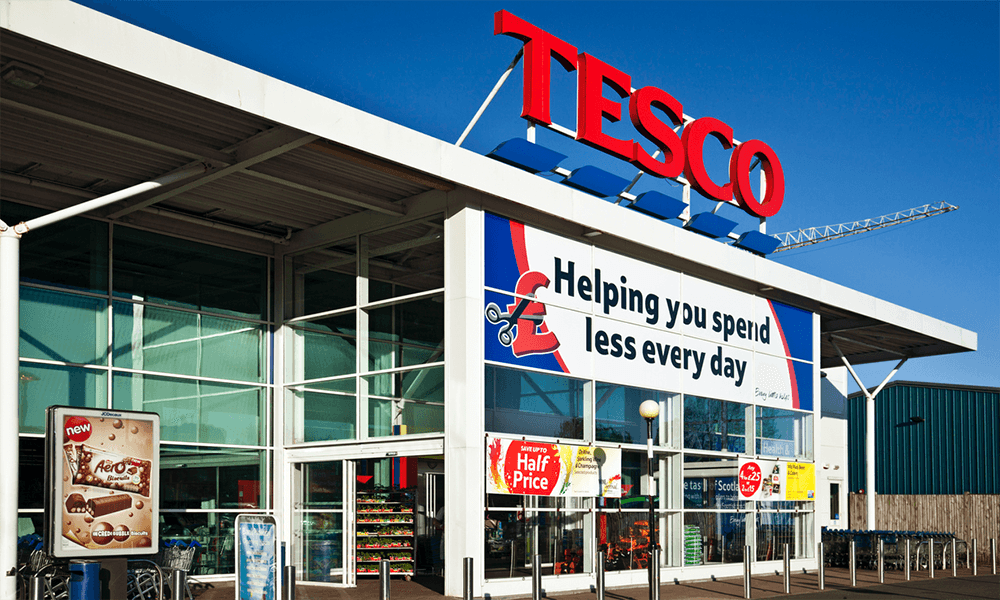
Morrisons was the first large UK supermarket to commit to electronic shelf labels (ESLs) across its entire estate, announcing a multi-million pound rollout in late 2025 to begin in early 2026. Tesco followed by confirming a major ESL rollout in June 2026 in partnership with Hanshow, building on its 2025 proof-of-concept trials. Asda has completed ESL deployment across 250 of its Express convenience stores.
The productivity case is clear. ESLs eliminate manual price-change labour almost entirely. They reduce pricing errors -- which are a compliance risk under UK trading standards as well as a margin drag. And they enable dynamic pricing of perishable goods, reducing food waste and improving margin on product that would otherwise be marked down late or written off entirely.
"We're excited to be the first large supermarket group in the UK to introduce digital shelf-edge labelling across our entire estate." -- Gordon Macpherson, Group Productivity Director, Morrisons, October 2025
For mid-market food retailers or convenience chains, ESL investment requires meaningful upfront capital. But the ROI case in a labour-cost environment where pricing-related tasks consume significant staff time is now more compelling than it has ever been.
3.3 Warehouse Automation and Fulfilment Efficiency
Ocado's entire business model is built on robotic fulfilment -- and while few mid-market retailers have the scale to replicate it, the technology is moving down-market. Ocado's pivot in 2026 toward modular Micro-Fulfilment Centres (MFCs) -- smaller footprint, lower entry cost -- is explicitly designed to make automated fulfilment accessible beyond the top tier of grocery operators.
Ocado's 550-series robots pick orders at 286 units per hour, an 11.9% efficiency gain over the prior generation. That kind of throughput improvement is not replicable manually. Automate UK data showed that sales of assembly-line robots to food, logistics, and consumer goods companies rose 31% in the first nine months of 2024 -- before the NLW and NIC increases had even fully landed.
Amazon and John Lewis use autonomous mobile robots (AMRs) to move goods around warehouses, reducing the walking time that accounts for a substantial share of manual picker activity. Sainsbury's has deployed AI-enabled forecasting tools as part of a £1bn investment programme to ensure the right products are in the right place at the right time, reducing both out-of-stocks and overstocking. Morrisons' ESL system links directly to shelf-edge cameras that guide staff to empty shelves, improving online picking accuracy and replenishment speed.
Warehouse and Fulfilment Technology: Productivity Impact
| Technology | Productivity Gain | Time to ROI | Accessible to Mid-Market? |
|---|---|---|---|
| Assembly-line robots (sorting, packing) | 30-40% throughput uplift | 12-24 months | Large operators mainly |
| Autonomous mobile robots (AMRs) | 25-35% reduction in picker travel time | 18-36 months | Growing accessibility |
| AI demand forecasting | 20-35% reduction in stock errors | 3-6 months | Yes, via SaaS platforms |
| Electronic shelf labels | Eliminates manual price-change labour | 24-48 months | Yes, at convenience scale |
| AI workforce scheduling | 5-10% labour cost reduction | 1-2 months | Yes, relatively low cost |
Sources: Ocado, Automate UK, McKinsey, Gartner 2026
3.4 Store Estate Rationalisation and Format Optimisation
This one is harder to measure but arguably the most powerful driver of the productivity numbers. If you close a low-performing 10,000 sq ft store that generates £400 per sq ft annually, and transfer those customers to a leaner 3,000 sq ft convenience format generating £900 per sq ft, the estate gets substantially more productive -- without any new technology.
Morrisons confirmed plans in 2026 to close 100 underperforming large-format superstores and accelerate its transition to smaller convenience formats. Tesco plans over 70 new Express outlets this year. Sainsbury's is in its largest convenience expansion in over a decade. The grocery sector's strategic consensus is clear: big boxes are expensive to staff and run, smaller formats are more productive per square foot.
M&S announced it was aiming to reduce its estate to 180 full-line stores and 420 food stores, explicitly citing legacy stores as more expensive to operate. The company has also been converting redundant Homebase sites into premium food halls -- larger formats where the economics justify the footprint because the sales density supports them.
The productivity signal is visible in the aggregate data. Total occupied retail space in the UK remained at 1.7 billion sq ft through Q2 2026. But the mix is changing. Fewer large, low-density units. More tightly configured, high-traffic small formats. When you hold space flat and grow sales, the result is exactly what CoStar recorded: record productivity per square foot.
Key insight for retail leaders: If you have stores that are pulling your average down, they're not just underperforming -- they're making the rest of your estate look worse by blending into a low average. Know your productivity outliers. Then do something about them.
3.5 SKU Rationalisation and Ranging Discipline
This is the quiet one. Less visible than robots or self-checkouts, but operationally significant and directly within the control of buying and trading teams.
Major UK grocers including Asda, Tesco, and Sainsbury's have all been actively reducing their SKU counts as a deliberate productivity strategy. Asda is "explicitly prioritising SKU reduction to refocus on core lines and improve value, bay by bay." When you carry fewer lines, replenishment is simpler, out-of-stock rates drop, stock turn improves, and the burden on store teams decreases. You also buy deeper into fewer lines, which typically improves supplier terms.
For mid-market fashion, homewares, and beauty retailers, ranging discipline is often resisted because buyers are rewarded for new product development and range breadth. But every additional SKU that sits below a minimum turn threshold is a hidden productivity drag -- it occupies shelf space, demands replenishment labour, absorbs markdown budget, and complicates warehouse operations. The retailers extracting the best productivity from their estates are often the ones running the tightest ranges.
4. The Self-Checkout Debate: Productivity Tool or Customer Experience Risk?
No discussion of retail labour productivity in 2026 is complete without addressing self-checkout -- and doing so honestly, because the picture is more complicated than most commentary admits.
Self-checkouts unambiguously reduce labour costs at the checkout stage. A retailer operating 10 staffed checkouts that serves the same volume with 2 staffed lanes and 12 self-service units has materially improved its checkout productivity, even accounting for loss-prevention and customer experience friction.
Tesco's GetGo self-service stores -- fully autonomous, no checkout at all -- represent the further end of this model, though Tesco operates only a handful of these in the UK. Amazon trialled similar "just walk out" technology but has pulled back from some locations due to operational complexity. The fully unstaffed store remains at the experimental edge rather than mainstream deployment.
Where self-checkouts are creating real complications is in loss prevention. Shrinkage rates at self-checkout lanes are measurably higher than at staffed tills -- whether from intentional theft, scan errors, or product substitution. A retailer that saves 0.5% of payroll by reducing checkout staff but loses 0.3% of revenue to additional shrinkage has made a net gain, but a smaller one than the labour reduction alone suggests.
The more honest productivity case for self-checkout is that it frees staffed colleagues for tasks that genuinely require human judgement: customer assistance, replenishment quality checking, loss prevention, and fresh food management. That's a real productivity gain. The mistake is treating self-checkout purely as a headcount elimination tool rather than a labour reallocation tool.
Ask yourself: Where are your staffed colleagues actually spending their time? If they're standing at checkout tills during low-traffic periods, that's misallocated labour. If self-checkout could free them for productive floor tasks, the productivity case is strong. If it just means fewer people overall with no reallocation, you may be trading a short-term cost saving for a long-term service decline.
5. The AI Forecasting Opportunity: Real ROI in 18 Months
AI in retail operations has been discussed for years at a strategic level. What's different in 2026 is the ROI data coming from retailers who have actually deployed it.
NVIDIA's 2026 AI in Retail and CPG survey found 89% of retailers report AI has helped increase revenue, and 94% say it has reduced operating costs. These are not projections from companies in pilot phase -- they're live deployments at scale.
The five highest-ROI AI deployments for UK retailers right now, based on actual case data:
1. Customer support automation -- 30-70% reduction in support costs. UK homewares retailers on 9,000 monthly tickets pre-deployment have reported £240,000 annual savings after deploying AI support agents.
2. Returns processing automation -- 40-60% compression of processing time. Consumer Rights Act compliance requirements make returns labour-intensive. AI-driven triage and resolution is cutting this significantly.
3. Inventory and demand forecasting -- 20-35% reduction in stock errors. AI forecasting reduces both overstock (which ties up working capital) and out-of-stocks (which directly cost sales). RELEX, which serves multiple UK grocers, reports 30% reductions in fresh food spoilage compared to ERP-based forecasting on its Agentic AI platform.
4. Marketing personalisation -- 40-55% reduction in agency or creative production costs when AI replaces manual content production. Tesco and Sainsbury's are also monetising this through retail media, with Nectar360 and Clubcard Prices data enabling personalisation at a level that increases basket size.
5. Workforce scheduling -- 5-10% labour cost reduction by aligning staffing to footfall patterns, as discussed. Fast to deploy, fast to return.
AI Deployment ROI Summary for UK Retail
| Use Case | Cost Reduction | Typical Payback | Complexity |
|---|---|---|---|
| Customer support AI | 30-70% of support cost | 4-7 months | Low |
| Returns processing AI | 40-60% of labour time | 4-8 months | Low-Medium |
| Demand/inventory forecasting AI | 20-35% stock error reduction | 3-6 months | Medium |
| Workforce scheduling AI | 5-10% labour cost | 1-3 months | Low |
| Marketing personalisation AI | 40-55% agency cost reduction | 6-12 months | Medium |
Sources: WayaNerd 2026, McKinsey, NVIDIA AI in Retail Survey 2026, RELEX 2026
The key word in all of this is "deployed." The retailers seeing these returns are not the ones with AI strategies written in PowerPoint. They're the ones who picked a workflow, built or bought a solution, ran a tight pilot, measured the result, and rolled out. That cycle, for the use cases above, now takes months rather than years.
6. Balancing Productivity Gains With Staff Experience
Here's the tension nobody wants to talk about: most of the productivity gains above come, in some form, from reducing hours worked, eliminating roles, or automating tasks that humans used to do. And the UK employment rights landscape in 2026 is not a permissive one for employers who want to restructure rapidly.
The Employment Rights Act, which became law in January 2026, introduces guaranteed hours provisions, enhanced union rights, and day-one unfair dismissal protections. The BRC warned in August 2026 that guaranteed hours reforms alone could add significant additional costs -- precisely because they reduce the scheduling flexibility that labour optimisation tools are trying to create.
The CFO sentiment data is stark. Two-thirds of retail CFOs describe themselves as "Pessimistic" or "Very Pessimistic" in mid-2026, up from 56% six months earlier. The specific concern is the combination of wage inflation, guaranteed hours, and union rights -- which together make labour cost management both more expensive and more legally constrained.
This isn't a reason to avoid productivity investment. It's a reason to think carefully about how productivity gains are framed internally and structured in practice.
The retailers managing this well are approaching it as workforce evolution, not workforce reduction. They're redeploying staff from automated tasks -- price changes, checkout, manual stock counting -- into roles that improve the customer experience: replenishment quality, expert product advice, click-and-collect fulfilment, loss prevention. That's a productivity gain that also improves service. It's a much easier conversation with unions and with staff than "we're reducing hours because machines are cheaper."
Key insight for retail leaders: The most sustainable productivity gains in a high-employment-rights environment come from technology that makes existing staff more effective, not just technology that replaces them. The former is easier to implement, easier to justify legally, and tends to improve retention.
7. Measuring What Actually Matters: The Metrics That Drive Decisions
Most retail operations teams track a lot of metrics. Very few track the ones that connect directly to productivity performance and allow early-stage intervention.
The metrics that matter most in a labour-cost environment like 2026:
Sales per labour hour (SPLH): The most direct productivity measure for store operations. Take store sales for a period and divide by total labour hours worked in that period. This should be tracked by store, by shift type, and by day-of-week. The spread between your best and worst-performing stores is your productivity improvement opportunity.
Sales per square foot (annualised): The space productivity metric. At a sector level, this is now at £61.92 per sq ft for Q2 2026. Know where each of your stores sits relative to this and relative to your own estate average. Stores below threshold should be on a named improvement plan or a closure shortlist.
Labour cost as a percentage of sales: The classic margin protection metric. With NLW and NIC changes, a retailer that ran at 14% labour-to-sales in 2024 may be running at 15.5-16% now on the same staffing model. The improvement target is to get back toward 14% through either revenue growth, staffing efficiency, or a combination. This is not achievable through pay freezes -- it requires structural change.
Scheduling adherence / roster compliance: How closely actual hours worked match planned hours. Chronic over-rostering, unplanned overtime, or high agency usage are all symptoms of a scheduling model that isn't working. These are fixable with the right tools.
Shrinkage rate (loss prevention): In an environment where checkout automation is increasing, shrinkage is an offset that erodes productivity gains if not actively managed. Know your rate, know where it's happening, and separate self-checkout shrinkage from other categories so you can address each specifically.
Productivity by category (for multi-product retailers): In fashion, beauty, or homewares, the productivity of space and staff varies enormously by category. Know your GBP per square foot by category and by store zone. Categories running at half the estate average are either ranging problems or space allocation problems. Either way, they're solvable.
UK Retail KPI Benchmarks 2026
| Metric | Sector Average | Top-Quartile Target | Warning Threshold |
|---|---|---|---|
| Sales per sq ft (physical, excl. fuel) | £61.92 | £90+ | <£45 |
| Labour as % of sales (grocery) | 13-15% | 11-12% | >17% |
| Labour as % of sales (fashion/GM) | 15-18% | 13-14% | >20% |
| Output per hour (YoY growth) | +0.7% | +2%+ | Negative |
| Scheduling adherence | 85-90% | 95%+ | <80% |
Sources: ONS, CoStar, GrowSights estimates based on sector data
8. What Mid-Sized Retailers Can Implement Right Now
This section is for operators in the £5m-£50m revenue bracket. Not Tesco. Not Ocado. You.
The large retailers have advantages in capital and in data volume. But the productivity tools available in 2026 are increasingly accessible at smaller scale, and the urgency of the cost environment is no less acute for mid-market operators.
Here's what's realistic, affordable, and proven in your revenue tier:
In the next 90 days:
-
Audit your scheduling model. If your store managers are building rotas manually or from a template, you're almost certainly misallocating labour. Implement an entry-level AI scheduling tool. Solutions like Quinyx, Deputy, or Fourth are accessible at SME retail scale. Pick one and run a 3-month pilot in two stores. Measure SPLH before and after.
-
Run a SKU productivity analysis. Pull your sales and margin data by SKU and rank by contribution per linear metre of shelf space. The bottom 15% of lines by space productivity are candidates for ranging out. Do this quarterly. The discipline of doing it once is less valuable than doing it consistently.
-
Review your staffing model for the Employment Rights Act. The guaranteed hours provisions are coming. If your rostering model is built around significant variability in hours, you need a legal and HR review now rather than reactively.
In the next 6 months:
-
Deploy an AI demand forecasting tool. If you're still using sales history + gut feel to place purchase orders or run replenishment, you're carrying more stock than you need and having more out-of-stocks than you should. RELEX, Slim4, Retail Express, and others have SME-accessible pricing. The stock error reductions (20-35%) are real. At a mid-market retailer with £500k-£2m in stock, that's meaningful working capital.
-
Calculate your self-checkout business case. If you're a food or general merchandise retailer with consistent checkout queues during peak hours, the labour case for self-service tills now needs to be modelled with current NLW and NIC figures, not 2023 assumptions. The numbers have shifted in favour of investment.
-
Run an estate audit. Score every site on sales per sq ft, labour cost as a % of sales, and rent-to-sales ratio. Any site that underperforms on all three deserves a serious conversation about format, lease renegotiation, or closure.
In the next 12-18 months:
-
AI customer service automation. If you have an inbound customer support function handling returns, complaints, or product queries, an AI-first support layer with human escalation is a 12-18 month project that typically pays back within 6 months of go-live. For a retailer handling 2,000-5,000 support interactions monthly, this is no longer a "big retailer only" solution.
-
Electronic shelf labels (if food/c-store). The entry cost for ESL systems has been falling. At convenience store or small supermarket scale, the ROI case is becoming viable, particularly as Asda's 250-store Express rollout demonstrates that the technology works in small-format contexts.
What not to prioritise right now:
Fully automated checkout (i.e., cashierless stores). The technology is still operationally complex, customer acceptance in the UK is uneven, and the shrinkage data doesn't yet support widespread rollout without significant offsetting investment in loss prevention.
Large-scale warehouse robotics (unless you're operating a fulfilment centre at meaningful scale). The entry cost and complexity are still prohibitive for most mid-market operators. Focus on software-driven productivity first -- the ROI is faster and the operational risk is lower.
9. How UK Retailers Compare: The Competitive Context
The productivity challenge is not unique to the UK, but its specific combination of pressures is.
France, Germany, and the Netherlands have higher minimum wages in absolute terms but did not experience the NIC threshold change that brought part-time workers into employer contributions for the first time. UK retailers are managing both a direct wage cost increase and a structural NIC change simultaneously.
The US comparison is instructive in a different way. US retailers operating at scale in logistics automation -- Amazon, Walmart, Target -- have a capital depth advantage that allows them to absorb automation investment over longer payback periods. UK mid-market retailers do not have that luxury. But they also don't face the same union constraints on automation deployment that apply in some US warehouse environments.
Within the UK, the competitive divergence is widening. Tesco and Sainsbury's, with dominant market shares and sophisticated loyalty data, can use data-driven decisions at a level that smaller operators cannot replicate. The productivity gap between grocery's top two and the middle market is widening -- not because the mid-market is standing still, but because the large players are moving faster.
Where mid-market UK retailers genuinely can compete is in agility. A 10-store independent grocery chain or a 30-store fashion retailer can implement a scheduling tool, run an estate audit, and make a ranging decision faster than a 3,000-store national business can build the governance process to approve the same initiative.
That agility advantage is real. But it only matters if you use it.
UK vs European Retail Productivity Pressures 2026
| Pressure | UK | France | Germany | Netherlands |
|---|---|---|---|---|
| Minimum wage (hourly) | £12.71 | ~£12.10 | ~£12.00 | ~£12.40 |
| Employer social contribution increase | Yes (NIC +1.2pp + threshold cut) | No major change | No major change | No major change |
| Employment Rights Act complexity | High (2026 ERA) | Moderate | High | Moderate |
| ESL adoption rate | Accelerating (Tesco, Morrisons, Asda) | Mature | Mature | Mature |
| Warehouse automation investment | Growing | Growing | Leading | Growing |
Sources: Low Pay Commission, BRC, Gartner 2026, GrowSights analysis
10. What the Data Doesn't Tell You (And Why That Matters)
The productivity story of 2026 has a caveat that deserves its own section.
The Resolution Foundation's finding that productivity gains were achieved by "the same workers, doing the same jobs, in the same sectors" is encouraging for the narrative. But it sits alongside employment data that is unambiguously negative. Retail employment is at its lowest on record. Part-time jobs are down 235,000 over a decade. Youth unemployment is at 15.9%, with 730,000 under-24s unable to find work.
These two things are connected. The productivity gain partly reflects the fact that retailers have become more selective about which roles they fill. Where they once absorbed a staffing buffer -- a few extra hours here, an extra headcount there -- rising costs have eliminated that buffer. The remaining workforce is working harder and more efficiently. But the base has also shrunk.
This has social consequences that sit outside a pure productivity calculation. The BRC has flagged that the entry-level and flexible roles most at risk from rising employment costs are also the ones most likely to be held by young people, people returning to work after a career break, and those with caring responsibilities. These are jobs that the labour market needs to exist.
That's not an argument against productivity investment. But it is an argument for thinking about the composition of productivity gains, not just the aggregate number. A retailer that achieves higher output per hour by eliminating all its part-time roles and replacing them with full-time specialists has made a very different set of decisions than one that achieves the same result through scheduling optimisation and SKU rationalisation. Both show up the same way in the productivity statistics.
At GrowSights, we work with mid-market retail operators who are navigating precisely these trade-offs -- not with theory, but with operational reality. The pattern we see most often is retailers who have absorbed cost increases reactively, without a structured diagnosis of where productivity is actually being lost. The fix is usually closer and cheaper than they expect.
Key Lessons for Retail Leaders
Lesson 1: The Productivity Gains Are Real But Not Automatic
The sector-level data is encouraging. UK retail output per hour is growing again, sales per square foot is at a record, and the Resolution Foundation's analysis suggests the improvement is genuine rather than a statistical artefact. But none of this happens by default. Every retailer in those averages that is performing above the line made deliberate decisions. And every retailer below the line is pulling it down.
Ask yourself: Do you know whether your business is above or below your sector's productivity average on SPLH and sales per sq ft? If you don't know the answer, finding it out is the first investment you should make.
Lesson 2: Software Before Hardware
The biggest productivity gains available to mid-market retailers right now come from software -- scheduling tools, demand forecasting, AI customer service -- not from robots or physical infrastructure. Software is faster to deploy, cheaper to reverse if it doesn't work, and generates measurable ROI within months. Hardware is slower, more capital-intensive, and harder to unwind. Start with software. Build the operational habits. Then consider hardware when the business case is unambiguous.
Lesson 3: Estate Productivity Is a Strategy, Not Just a Number
Sales per square foot is not just a performance metric. It's a strategic lever. Retailers who actively manage their estate -- closing underperformers, renegotiating leases, converting to more productive formats -- have a structural advantage over those who treat their store estate as fixed. In 2026, with commercial landlords under pressure and lease renegotiation leverage higher than it's been for a decade, this is an unusually good moment to have the estate conversation.
Lesson 4: Employment Rights Act Is a New Constraint, Not a Reason to Stop
The guaranteed hours and day-one protections in the Employment Rights Act will create genuine operational complexity. But they don't make productivity investment impossible -- they make it more important to do it right. Technology that improves scheduling quality and consistency is actually an Employment Rights Act compliance tool as much as it is a cost reduction tool. Frame it that way internally.
Lesson 5: Mid-Market Agility Is an Underused Advantage
Large retailers have capital, data scale, and supplier leverage. Mid-market retailers have speed. The ability to implement a tool, measure the result, and iterate in 90 days rather than 18 months is genuinely valuable. Most mid-market operators underutilise this. They delay decisions that a larger competitor would make in a governance meeting. The cost environment of 2026 doesn't allow for that delay.
Actionable Recommendations
For Retail Business Owners and CEOs
- Commission a productivity audit: SPLH by store and by shift, sales per sq ft by store and by category, labour cost as a % of sales compared to 2023 as a baseline.
- Set a named target for productivity improvement (e.g., SPLH up 8% in 12 months) and assign accountability to a specific operational leader.
- Use the lease renewal cycle as an active estate rationalisation opportunity. In 2026, landlords are negotiating.
- Do not let the Employment Rights Act be a reason to avoid scheduling technology -- it's actually a reason to invest in it faster.
- If you haven't modelled the full NLW and NIC impact on your payroll since April 2026, do it now. Many operators are carrying the shock without having diagnosed where it's worst.
For Operations Directors and Store Managers
- Run a SPLH analysis on your own estate. Identify your three highest and three lowest performing stores. Understand what's different about how they're run.
- Challenge your rostering process. If managers are building rotas from last week's template, you're leaving productivity on the table. Pilot a data-driven scheduling tool in two stores for 90 days.
- Track shrinkage by checkout type. If self-checkout is generating higher shrinkage rates, quantify it and factor it into your net productivity calculation.
- Review your ranging. The stores carrying the most SKUs are often the least productive. SKU rationalisation is a decision that operations can lead, not just buying.
For Finance Directors and CFOs
- Rebase your labour-cost-to-sales targets using post-NLW and post-NIC figures, not pre-2025 assumptions.
- Model the productivity scenarios: What does your margin position look like at +5%, +10%, and +15% improvement in SPLH? This creates the investment case for the tools to get you there.
- Treat AI scheduling and demand forecasting as P&L investments, not IT projects. The payback periods are short enough to justify as operational expenditure rather than capital.
- Stress-test your estate under guaranteed hours obligations. Which sites become financially unviable if you can't flex hours downward?
For B2B Leaders and Suppliers to Retail
- If your product helps retailers measure or improve SPLH, sales density, or labour efficiency, frame it in those terms with retail buyers. The conversation has shifted from "innovation" to "operational necessity."
- Expect buyers to push for supply chain collaboration that reduces their replenishment labour -- simpler packaging, better case counts, more predictable delivery schedules.
- Understand that ranging decisions are now being made with productivity data. If your SKU is not pulling its weight in sales per linear metre, it's at risk regardless of brand equity.
Final Summary
| Productivity Challenge | What's Driving It | What Your Business Should Do |
|---|---|---|
| Rising NLW and NIC costs | NLW up to £12.71; NIC rate up to 15% with lower threshold; £6.5bn added to sector costs | Rebase your labour-cost-to-sales model. Know your post-April 2026 break-even per store. |
| Labour scheduling inefficiency | Manual or template-based rostering; misaligned hours and demand | Deploy AI scheduling tools. Target 5-10% SPLH improvement in 90 days. |
| Low sales per square foot | Large-format legacy estate; under-performing locations | Audit your estate against sector average of £61.92/sq ft. Act on underperformers. |
| Pricing labour cost (food/c-store) | Manual shelf-label changes; promotional complexity | Model the ESL business case with current NLW rates. The payback period has shortened. |
| Excess SKU count | Range breadth rewarded over range productivity | Run a quarterly SKU rationalisation. Remove the bottom 15% by space productivity. |
| Warehouse and fulfilment cost | Manual picking and labour-intensive fulfilment | Invest in demand forecasting AI first. Warehouse robotics second, when scale justifies it. |
| Employment Rights Act complexity | Guaranteed hours, day-one protections, enhanced union rights | Treat scheduling technology as an ERA compliance tool. Involve HR from the start. |
Looking Ahead: Productivity in 2027 and Beyond
The Resolution Foundation's analysis is encouraging for the near term. UK retail productivity is growing again, the data basis for measuring it is improving as the ONS overhauls its methodology, and the sector is demonstrating genuine adaptability under structural cost pressure.
But the operating context for 2027 will not be materially easier. The NLW is likely to rise again. The Employment Rights Act will have its full guaranteed hours provisions in effect. Business rates changes will continue to add to cost pressure for larger-format operations.
What will separate the retailers with strong productivity trajectories from those continuing to absorb without adapting comes down to three things: the quality of their operational data, the speed with which they act on it, and the discipline to treat productivity not as a one-time project but as an ongoing management practice.
Morgan Stanley's chief UK economist estimates private-sector productivity growth is now running at around 1.8% per year -- close to pre-financial-crisis rates. For the first time in years, there is genuine momentum to build on.
The retailers who will look back at 2026 as the year they turned a cost crisis into a structural productivity advantage are the ones acting on that momentum right now. Not planning to act. Not reviewing options. Acting.
The tools exist. The data supports the investment case. The cost environment makes inaction increasingly expensive.
What's yours?
Frequently Asked Questions
What is driving retail productivity in the UK in 2026?
A combination of things -- and it's worth being honest that not all of them are positive. The Resolution Foundation's analysis found that UK retail productivity grew at an average of 1.1% a year over the two years to June 2026, driven by scheduling discipline, store estate rationalisation, and technology investment in areas like AI demand forecasting and electronic shelf labels. But the same period saw retail employment fall to its lowest level on record. Some of the productivity gain reflects genuine operational improvement. Some of it reflects a leaner workforce being pushed harder. The best operators are achieving both; the ones to worry about are improving the statistic by shrinking the base without improving the underlying operations.
How much have labour costs actually increased for UK retailers?
More than most people appreciate at a line-item level. The NLW rose to £12.71 per hour from April 2026. But the bigger structural shift was the Autumn Budget 2024 change to employer National Insurance -- the rate went up from 13.8% to 15%, and the secondary threshold at which NIC kicks in was cut from £9,100 to £5,000 per year. That second change brought a large number of part-time retail workers into NIC liability for the first time. The BRC estimates the combined impact added £6.5 billion in employment costs to the sector over a 14-month window, with the cost of employing a part-time entry-level worker rising by over 13%. For an operator running on 3-5% net margins, that's not a rounding error. It's an existential pressure.
What is sales per square foot and why does it matter?
Sales per square foot (or sales per sq ft) is the amount of revenue a retailer generates for every square foot of physical retail space it occupies. It's the most direct measure of how productively a store uses its space. In Q2 2026, the sector average hit a record £61.92 per occupied square foot, up 23% from late 2019 -- on the same total floorspace. That's significant because it means retailers are generating more revenue from the space they already have, rather than growing by adding more. For individual operators, knowing where each of your stores sits relative to this benchmark is one of the most useful diagnostic tools you have. A store running at £38/sq ft when your estate average is £65 is a problem you can put a number on.
Can mid-market retailers actually afford AI and automation tools?
Yes -- and this is probably the most important thing to clarify for operators in the £5m-£50m revenue range. The category of AI that delivers the fastest ROI in retail is not warehouse robotics or cashierless stores. It's workforce scheduling software, demand forecasting tools, and AI-driven customer support platforms. These are SaaS products with monthly subscription models, not capital projects. AI scheduling tools from providers like Quinyx, Deputy, and Fourth are accessible at 5-50 store scale. Demand forecasting tools like RELEX and Slim4 have mid-market pricing tiers. The payback periods on these tools -- typically 1-6 months -- are faster than almost any other operational investment a retailer can make. The barrier is not cost. It's the decision to start.
What is the Employment Rights Act and how does it affect retail productivity?
The Employment Rights Act became law in January 2026 and introduced three changes that directly affect retail labour management: guaranteed hours entitlements (which limit how much a retailer can vary hours for workers on variable contracts), day-one unfair dismissal protections (which make it harder to exit underperforming employees quickly), and enhanced union rights (which increase collective bargaining strength). The combined effect is to make the labour cost structure more fixed -- less flex in the hours you schedule, more legal risk if you reduce headcount quickly. This doesn't make productivity investment less important -- it makes it more important, and it changes which investments are highest priority. Technology that improves scheduling quality and consistency is effectively an Employment Rights Act compliance tool as much as it is a cost reduction tool. Retailers who invest now are building a more defensible operating model for a more constrained employment environment.
How do I know if my retail business has a productivity problem?
Three numbers will tell you most of what you need to know. First: what is your sales per labour hour (SPLH)? Take your store sales for a recent four-week period and divide by total hours worked. If you don't track this by store and by shift type, that's your first problem. Second: what is your sales per square foot, annualised? Compare it against the sector average of £61.92 and against your own estate average. Any store more than 25% below your estate average needs a plan or a decision. Third: what is your labour cost as a percentage of sales? With post-NLW and post-NIC figures, most retailers should be targeting 11-15% depending on format. If you're significantly above that and your sales aren't growing, the gap is coming out of margin. If you can't answer these three questions from data you already have, the diagnostic work is where to begin -- and GrowSights does exactly that.
What should mid-market retailers do first to improve productivity in 2026?
The sequencing matters as much as the choice. Start with a scheduling audit -- it costs almost nothing, and the insight it produces usually pays for itself within a month. Run a SKU productivity analysis next: pull your sales and margin data by SKU ranked by contribution per linear metre of shelf space, and identify the bottom 15% by space productivity. Those are the lines you should consider ranging out in the next buying cycle. Run an estate audit -- score every site on sales per sq ft, labour cost as a percentage of sales, and rent-to-sales ratio -- within the next 90 days. Then, once you have a clear picture of where you're losing productivity, make your first technology investment on the highest-ROI use case for your specific operation. For most mid-market retailers, that's either AI workforce scheduling or demand forecasting. Not robots. Not self-checkout. Software first.
Grow Your Business With Integrated Data and Operational Intelligence
Productivity isn't just about cutting costs -- it's about understanding, at a granular level, where your business generates output and where it leaks it. GrowSights works with mid-market UK retailers to build that picture fast -- in weeks, not quarters -- and to turn diagnostic insight into operational decisions that move the numbers.
If you've read this and recognised your own estate in the underperformance patterns, or if you're already making productivity investments but not sure whether they're landing, we'd like to talk. See how we work and who we typically work with.
The conversation starts at growsights.co.uk/start-a-conversation.
Research sources:
- Resolution Foundation -- UK Productivity Analysis, August 2026 (via Retail Gazette)
- ONS -- Productivity Flash Estimates Q1 and Q2 2026; Output per Hour Worked dataset
- BRC -- Retail Employment Data Q1 2026; CFO Sentiment Survey 2026; "Retail Jobs at Risk" report
- CoStar / Retail Sector -- Store Space Productivity Analysis, Q2 2026
- Gartner -- 2026 Market Guide for Retail Workforce Management Technology
- NVIDIA -- AI in Retail and CPG Survey 2026
- Forvis Mazars -- NLW and NIC Impact Analysis, 2026
- Low Pay Commission -- NLW Rate Recommendations 2026/27
- Retail Technology Innovation Hub -- Tesco ESL Rollout, Ocado IQ, 2026
- Retail Optimiser -- British Retailers and Digital Shelf Labels, July 2026
- Grocery Gazette -- Morrisons ESL Announcement, October 2025
- RELEX Solutions -- Agentic AI Fresh Food Forecast Data, 2026
- McKinsey -- AI Workforce Scheduling ROI Data
- WayaNerd -- AI Cost Reduction UK Retail 2026 Playbook
- CBRE -- UK Retail Outlook 2026
- Retail Sector / Internet Retailing -- UK Retail Productivity Coverage 2026
- ACS -- NLW Impact on Convenience Retailers, 2026
Published by GrowSights | Retail Intelligence and Growth Engineering | Point of View