Geary's Bakeries Just Won Bakery Manufacturer of the Year. Here's Why That's Bigger Than One Trophy
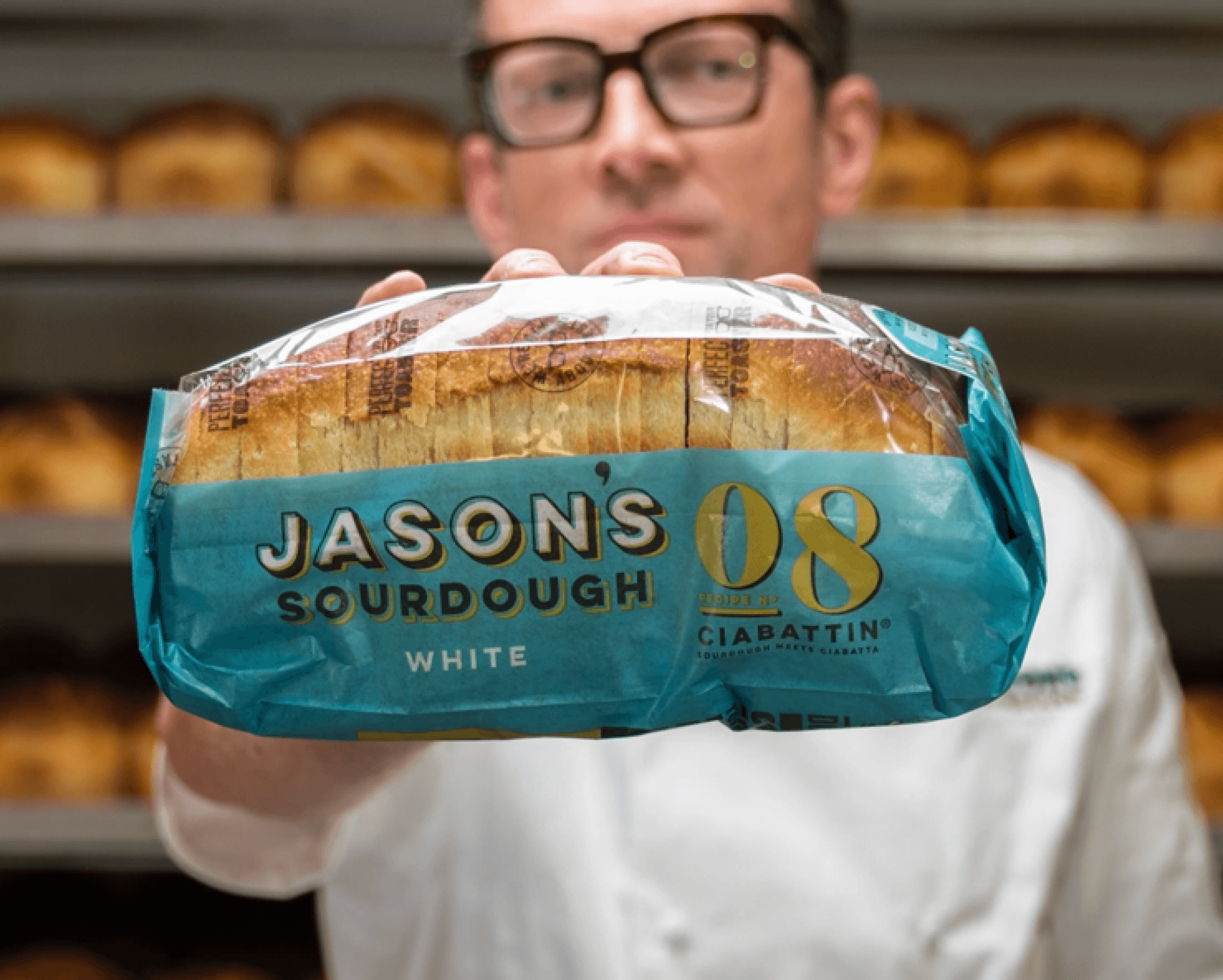
Jason's Sourdough didn't exist in 2019. By late 2025 it had overtaken Kingsmill to become the third biggest bread brand in Britain, and the family business behind it, Geary's Bakeries, had just been named Bakery Manufacturer of the Year 2025 at the Baking Industry Awards. Turnover is forecast to hit £130m this year. Staff numbers have gone from 212 to 888 in five years, heading past 1,000 by the end of the year.
1. The Scale of the Win
Geary's beat out Cherrytree Bakery and Regal Foods, both strong finalists, to take the top manufacturer prize, sponsored this year by FRITSCH Bakery Technologies. The judges' language was specific: a business with "a strong heritage rooted in traditional craft baking, combined with impressive investment in modern facilities," and a team with "a collective enthusiasm for their process, products, and growth which was truly impressive."
| Metric | Figure | Source |
|---|---|---|
| Turnover, forecast 2026 | £130m, up from £92m in 2024 | Baking Industry Awards, 2025 |
| Jason's Sourdough brand sales | £79.5m, 52 w/e 6 September 2025 | NIQ / The Grocer Top Products Survey |
| Brand sales growth, year on year | +114.5% (+£42.4m) | NIQ / The Grocer |
| Bread brand ranking | 3rd biggest in Britain, overtaking Kingsmill | The Grocer, December 2025 |
| Headcount | 888, up from 212 five years ago; 1,000+ expected by year end | Baking Industry Awards, 2025 |
| New factory investment | £35m-£36m, Glenfield site, operational May 2025 | Baking Industry Awards / British Baker |
| Brand launch | Early 2020 | The Grocer |
| Kingsmill sales, same period | £73.7m, down 31.5% (-£33.9m) | NIQ / The Grocer |
Here's the growth curve in context:
Jason's Sourdough brand sales (indexed to 52 w/e Sept 2024 = 100)
52 w/e Sept 2024   ██████████████████████████                (100%, £37.1m)
52 w/e Sept 2025   ████████████████████████████████████████  (214.5%, £79.5m)
That's not gradual category growth. That's a brand roughly doubling its retail sales value in a single trading year, inside a bread category most people assume is flat, commoditised, and impossible to disrupt.
2. The Business Behind the Brand: Four Generations, One New Factory
Geary's Bakeries is a family business, now run by fourth-generation master baker Jason Geary. It supplies own-label white bloomers, malted loaves, rustic wholemeals, and sourdough items to major retailers, alongside its own branded Jason's Sourdough range. That dual model, own-label manufacturing plus a fast-growing branded line under the same roof, is worth pausing on, because it's rarer than it sounds. Most bakeries pick a lane. Geary's built both, and let the branded side pull the manufacturing capability forward.
| Element | Detail |
|---|---|
| Ownership | Family business, fourth generation, led by Jason Geary |
| Core supply model | Own-label bread for major UK retailers plus branded Jason's Sourdough |
| Manufacturing approach | Semi-automated machinery, customised to Geary's own recipes |
| Production philosophy | Long fermentation, consistent standards at volume |
| Latest facility | Glenfield site, £35m-£36m investment, operational May 2025, doubled capacity |
The judges called out the manufacturing setup specifically: "Their focus on long fermentation processes and consistent product standards highlights their expertise and dedication to excellence." That's a harder thing to pull off than it sounds. Long fermentation is a craft baking process. Running it at a scale that supplies national retailers is an operations problem. Geary's has had to solve both at once, and the new factory was built specifically to remove the capacity ceiling that was starting to cap growth.
Jason Geary, on the win: "Winning Bakery Manufacturer of the Year in 2025 was an incredibly proud moment for everyone at Geary's and a testament to the dedication of our whole team. The recognition has given us a real boost and reinforced our commitment to raising the bar in British baking."
3. From Zero to Third Place in Six Years
The brand's rise has been rapid, but not accidental. It's a story of consistently overtaking the brand directly above it, one at a time.
| Period | Milestone |
|---|---|
| Early 2020 | Jason's Sourdough launches, just before the UK's pandemic sourdough boom |
| 2020-2024 | Brand overtakes Roberts Bakery to become the UK's fourth biggest bread brand |
| May 2025 | New £35m-£36m Glenfield factory opens, doubling production capacity |
| 52 w/e Sept 2025 | Brand overtakes Kingsmill, becomes third biggest bread brand at £79.5m, +114.5% |
| September 2025 | Jason's Proper Sourdough Crumpets launched, first move beyond bread |
| Late 2025 | Named Bakery Manufacturer of the Year 2025 at the Baking Industry Awards |
| 2026 | Crumpet Thins launched; brand secures its position as UK's number one sourdough brand |
Jason Geary has described the trajectory bluntly: "It's been a snowball effect." The brand launched right before lockdown, catching the UK's sourdough obsession at exactly the right moment, then kept compounding through a genuine wave of health-conscious consumers moving away from ultra-processed food.
What makes this more than a lucky launch window is what happened next. A brand that catches a trend and then plateaus is common. Jason's Sourdough kept climbing every single year, through a category that most of its competitors were losing ground in.
4. The Market Geary's Is Winning In
To understand why this win matters, you need the shape of the category it happened in. UK wrapped bread is not a growth category by volume. It's a category where the biggest legacy names are shrinking, and the value growth is being captured by a small number of brands moving fast in the opposite direction.
Brits spent an extra £160m on wrapped bread over the past year, taking total category spend to £3.4bn, a 4.9% increase. But that's largely inflation and premiumisation, not more bread being eaten: pack volumes only rose 2%.
| Bread Brand | Sales, 52 w/e 6 Sept 2025 | YoY Change |
|---|---|---|
| Warburtons | £598.3m | +2.1% |
| Hovis | Down £33.1m | Declining |
| Jason's Sourdough | £79.5m | +114.5% (+£42.4m) |
| Kingsmill | £73.7m | -31.5% (-£33.9m) |
Value change by brand, 52 w/e 6 Sept 2025 (£m)
Warburtons        ██████████████████████████████████████████  (+£12.3m)
Jason's Sourdough  ████████████████████████████████████████████████████████  (+£42.4m)
Hovis              ▼ (-£33.1m)
Kingsmill          ▼ (-£33.9m)
Two of the UK's oldest bread brands are each losing close to a third of their annual sales value in the same period Jason's Sourdough more than doubled. That's not two unrelated stories. Kingsmill's owner, Associated British Foods, is now moving through Competition and Markets Authority review to acquire Hovis, specifically to try to consolidate cost and stay viable in a shrinking segment of the category. Morrisons shut its own Rathbones bakery this year. A South Wales manufacturer, Brace's Bakery, closed a production site. Bakery director Jonathan Brace's read on it is blunt: standard bread manufacturers focused on commodity sliced loaves are going to keep struggling, and the market resetting itself is, in his view, ultimately healthy for the businesses that reinvest properly instead of running on a shoestring.
"In the long run I think it is good that the marketplace is resetting itself and hopefully have a reduced footprint which will allow the companies to make money, so they are able to reinvest properly and not run on a shoestring." -- Jonathan Brace, Director, Brace's Bakery, British Baker, February 2026
Geary's read the opposite side of the same reset correctly, years ahead of the reckoning that's now hitting Hovis and Kingsmill.
5. Why Sourdough, Specifically, Broke Through
Sourdough sits at the intersection of two forces reshaping UK grocery right now: premiumisation and the clean-label, anti-ultra-processed-food shift. Puratos UK's own consumer research (Taste Tomorrow) found that 66% of UK consumers consistently buy the brands they trust rather than reaching for the cheapest option, even under continued cost of living pressure. That's the opening Jason's Sourdough walked through.
| Consumer Signal | Data Point | Source |
|---|---|---|
| Consumers who buy trusted brands over cheapest option | 66% | Puratos Taste Tomorrow |
| Consumers seeking breads with better nutritional balance | 36% | Puratos Taste Tomorrow |
| Consumers who believe grains and seeds make bread healthier | 90% | Puratos Taste Tomorrow |
| Own label spend growth, 2025 | +6.6%, to £1.5bn | Worldpanel by Numerator |
| Branded bread spend growth, 2025 | +3.6% | Worldpanel by Numerator |
The category insight Jason's Sourdough leaned into is that most UK shoppers thought sourdough meant a crusty artisan loaf, and never considered it for everyday soft-bread eating occasions. Puratos UK marketing manager Lydia Baines put it plainly: "We're a nation of soft bread lovers, and people have traditionally seen sourdough as a crusty artisan loaf. But consumers are starting to understand that sourdough doesn't have to mean a crusty loaf. That opens up a real opportunity for soft sourdough in the wrapped bread category."
Jason Geary's own framing of the growth mirrors that same insight from the supply side: "In 2025, both brand value and product demand more than doubled, reflecting a growing consumer appetite for quality, transparency, and traditional baking methods." He also points to a broader pivot in the category towards wholegrain, multigrain, high-fibre, low sugar and functional options, "often at the expense of standard white loaves," alongside growing interest in how bread is made rather than just what's in it: provenance, fermentation, and craft as markers of premium quality.
"Education remains a powerful driver of growth, helping consumers understand the importance of time, fermentation, ingredients and craft in creating a truly great sourdough. This is especially relevant as more people actively seek out healthier options that don't compromise on flavour or quality." -- Jason Geary, Master Baker, Geary's Bakeries, British Baker, February 2026
That's a brand doing category education, not just selling loaves. It's a strategy that only works if the manufacturing behind it can consistently deliver the product the education promises, which loops straight back to why the £36m Glenfield investment mattered as much as the marketing.
6. What the Conventional Bakery Growth Playbook Misses
The instinctive response to a shrinking core category is to cut cost, protect margin, and hold the line on existing lines. That's roughly what's happened at Hovis and Kingsmill: portfolio consolidation, cost synergy mergers, and, in Hovis's case, a defensive first move into sourdough only after the category shift was already unmistakable, arriving well after Jason's had established category leadership.
Geary's did the opposite. It treated capacity as the constraint to remove before demand fully materialised, not after. The Glenfield factory wasn't built in response to existing demand outstripping supply by a small margin. It was built to enable the next phase of growth, and it was already looking at options for a further production site within months of Glenfield coming online.
This is a pattern we see constantly in the mid-market brands and retailers GrowSights works with: the businesses that win a shrinking or resetting category are rarely the ones protecting margin hardest. They're the ones that correctly diagnose which part of the category is actually growing, and then over-invest in capacity and consistency to serve it before competitors catch up. We've written before about what separates brands that keep compounding growth from those that stall out after an initial wave of momentum, in our look at UK mid-market retail growth stalling out. Geary's is the counter-example: six years of uninterrupted category climbing, backed by capacity investment that stayed one step ahead of demand rather than one step behind it.
7. The On-Shelf Reality Behind the Growth Numbers
Here's the part that headline sales figures never capture, and it's the part that matters most to anyone actually running supply into UK grocery retailers. A brand growing 114.5% in a single year isn't just a marketing and NPD story. It's a supply chain and on-shelf availability story happening in the background, at a pace most manufacturers aren't built to absorb.
Doubling demand for a fresh, short-shelf-life bakery product across Tesco, Sainsbury's, Asda, Ocado and Waitrose simultaneously is a genuinely difficult operational problem. Every retailer runs its own replenishment cadence, its own portal, its own forecasting quirks, and fresh bakery has almost none of the shelf-life buffer that protects ambient categories from a bad forecast. Get the supply signal wrong in one direction and you're binning short-dated stock. Get it wrong in the other and you're out of stock on the exact SKU that's driving the growth story, right as national advertising and award coverage is sending new shoppers to the shelf to look for it.
Key insight for retail leaders: The riskiest moment for a fast-growing bakery or short-shelf-life brand isn't the launch. It's the second year of hypergrowth, when demand is scaling faster than the retailer-specific replenishment and forecasting processes were built to handle.
This is precisely the gap GrowSights exists to close for mid-market FMCG brands selling into the Big Four and Ocado: turning fragmented, retailer-by-retailer availability data into the kind of Thursday-morning decision that prevents a phantom stockout from quietly capping a growth curve that everything else about the business is doing right. Our view on why analytics dashboards alone don't solve this problem, and what does, is laid out in how we define retail growth engineering.
8. New Formats: Building Beyond Bread Without Losing the Core
A brand growing this fast faces an obvious temptation: chase every adjacent NPD opportunity while the category tailwind is strong. Jason's Sourdough has expanded, but with more discipline than that temptation usually allows.
| Launch | Category Move |
|---|---|
| Ciabattin range | Sourdough-process hybrid, ciabatta format |
| Straight Up range (Great White, Majestic Malted, Superb Sprouted Grains) | Everyday sliced formats |
| Every Day Rolls (White, Tiger, Protein) | Rolls, including a protein-forward SKU tapping GLP-1-adjacent demand |
| Toasties and Hot Rolls | Food-to-go, foodservice and take-home formats |
| Creations range (fruit loaf, olive & basil) | Premium flavoured NPD |
| Jason's Proper Sourdough Crumpets | First move entirely outside bread, September 2025 |
| Crumpet Thins | Extension of the crumpet line, 2026 |
Every one of these moves stays inside a clearly defined brand territory: sourdough credentials, applied to a widening set of everyday eating occasions. That's a deliberate constraint. Geary's marketing and sales director Barry Dawber has explicitly framed the brand's ambition against challenger brands from other categories that disrupted through a consistent, premium positioning rather than a scattershot product range, name-checking Tony's Chocolonely, Fever-Tree, Innocent and The Collective as the model Jason's is following.
Jason's loaves command a genuine premium, priced around £2 each, in a category where own label competes hard on price. That pricing power only holds if consumers trust the brand enough to pay it, which is exactly why the category education strategy and the manufacturing consistency have to move together.
9. Rise and Fall: The Wider Bread Category Reset
Geary's win doesn't exist in isolation. It's happening inside one of the most significant structural resets British bread has seen in a generation.
| Brand / Business | 2025-2026 Development |
|---|---|
| Warburtons | Holds number one position, +2.1% to £598.3m |
| Hovis | Down £33.1m; CEO Jon Jenkins stepped down; entering CMA-reviewed merger with Kingsmill owner ABF |
| Kingsmill (Allied Bakeries) | Down £33.9m (-31.5%); pursuing Hovis acquisition partly to avoid Allied Bakeries closure |
| Roberts Bakery | Filed notice of intention to appoint an administrator, October 2025; rescued by Boparan Private Office days later |
| Jason's Sourdough | Up £42.4m (+114.5%); now third biggest brand |
| Morrisons (Rathbones bakery) | Closed at start of 2026 due to declining demand for standard sliced |
| Brace's Bakery | Closed a production site; discontinued its Protein sourdough variant |
Jason Geary's own explanation of the underlying cause is worth taking seriously, because it comes from someone who has spent his career inside plant bakery economics: "For 15 years, there's been overcapacity in plant bakeries. At the end of the day, there was only a certain amount of volume within the bread industry, and you'd got these four or five plant bakers" competing for a static or shrinking pool of standard bread demand.
Geary's answer to structural overcapacity in commodity bread wasn't to compete harder on the same commodity terms. It was to build an entirely new, premium-positioned demand pool that didn't previously exist at scale in wrapped bread, then invest in the capacity to serve it properly.
10. What This Means for Mid-Market UK Retail Brands
Pull the Geary's and Jason's Sourdough story apart, and several patterns hold well beyond bread.
First: category resets create real winners, not just casualties. The brands that treat a structurally declining segment as a reason to retreat usually lose to the brand that correctly identifies the adjacent, growing segment and moves capital into it early.
Second: capacity investment has to lead demand, not follow it. Geary's built its £36m factory to enable growth it hadn't fully realised yet, and was already scouting further expansion within months. Waiting until demand outstrips supply before investing means losing distribution and shelf presence exactly when the brand has the most momentum to lose.
Third: premium positioning and education have to move together. Jason's Sourdough didn't just launch a premium product; it spent years explaining to UK shoppers why sourdough belonged in their everyday bread rotation, not just as an occasional treat.
Fourth: the operational risk in hypergrowth is invisible until it isn't. A brand doubling sales across five major UK retailers simultaneously is one missed replenishment cycle away from a stockout that undoes months of marketing spend and earned media.
Key Lessons for Retail Leaders
Lesson 1: A shrinking category isn't the same as a shrinking opportunity
Warburtons, Hovis and Kingsmill collectively show that overall bread category health and individual brand health have almost nothing to do with each other right now. Jason's Sourdough grew £42.4m in a category most of its biggest rivals are shrinking in.
Ask yourself: If your core category is flat or declining, have you actually mapped which adjacent segment inside it is growing, or are you just defending the segment that's shrinking?
Lesson 2: Capacity is a growth strategy, not a cost centre
Geary's built ahead of demand, twice: once with the original brand launch capacity, and again with the £36m Glenfield factory. Waiting for demand to justify the investment usually means losing the growth window entirely.
Ask yourself: Is your manufacturing or supply capacity currently a constraint on your growth story, or an enabler of it?
Lesson 3: Hypergrowth creates its own availability risk
The faster a brand grows across major UK retailers, the more fragile its on-shelf execution becomes, because every retailer's replenishment system was calibrated for the old, slower sales velocity.
Ask yourself: Do you actually know, retailer by retailer, whether your fastest-growing SKUs are going out of stock at the moment demand is peaking?
Actionable Recommendations
For Retail Business Owners and CEOs
- Map your category the way Geary's did: identify the specific, growing sub-segment inside a flat or declining overall market, and build your investment case around that segment specifically, not the category average.
- Treat capacity investment as a leading indicator, not a lagging one. If you wait until you're confident demand justifies new capacity, you've likely already started losing distribution to a faster-moving competitor.
- Build (or buy) visibility into retailer-by-retailer on-shelf availability before hypergrowth hits, not after. The brands that get caught out are the ones scaling demand without scaling supply chain intelligence at the same pace.
For B2B Leaders and Suppliers to Retail
- If you supply fast-growing bakery, chilled or other short-shelf-life brands, help clients build forecasting models that update at the pace of their actual growth curve, not the retailer's default replenishment assumptions.
- Flag the stockout risk explicitly to clients riding a hypergrowth curve. A brand growing 100%+ year on year is statistically more likely to be under-forecast than over-forecast at retailer level.
For Industry Strategists
- Watch which manufacturers are investing in capacity ahead of confirmed demand right now. That's usually the clearest early signal of which brands will still be gaining share in three years, versus which ones will plateau once their initial tailwind fades.
Final Summary
| Growth Category | What Geary's Did Differently | What Your Business Should Do |
|---|---|---|
| Category diagnosis | Identified soft, everyday sourdough as an underserved segment inside a declining wrapped bread category | Map your category by growing sub-segment, not overall category trend |
| Capacity strategy | Invested £35m-£36m in new capacity ahead of confirmed demand, then scouted further expansion within months | Treat manufacturing or supply capacity as a growth enabler, not a lagging cost decision |
| Brand positioning | Combined genuine premium pricing with sustained category education on fermentation and craft | Pair premium pricing with real consumer education, not just packaging cues |
| Product expansion | Extended into rolls, toasties and crumpets while staying inside a clear sourdough brand territory | Expand NPD around a consistent brand truth, not just whatever the category tailwind allows |
| Operational risk management | Scaled manufacturing consistency alongside brand growth, avoiding the quality dilution that often accompanies hypergrowth | Build on-shelf availability visibility before hypergrowth hits, not after the first stockout crisis |
Grow Your Business With Integrated Data and Operational Intelligence
Geary's win wasn't a marketing story dressed up as a manufacturing award. It was the result of correctly reading a category reset years before it became obvious, then investing in capacity and consistency fast enough to capture the growth that reset created. Most mid-market UK FMCG brands are sitting on some version of that same opportunity right now, a growing pocket of demand inside a category everyone else has written off, but without the on-shelf visibility to know whether their supply chain can actually keep up once it takes off. That's the exact problem GrowSights was built to solve. Find out more about how we work and who we work with, or start a conversation about what your own availability data is already telling you.
Research sources: Baking Industry Awards 2025 official winners page and Geary's Bakeries category coverage (bakeryinfo.co.uk), The Grocer Top Products Survey 2025 (NIQ data via bakeryinfo.co.uk and thegrocer.co.uk), British Baker "Clean labels, fibremaxxing and a market reset" feature (February 2026), British Baker interview coverage on Jason's Sourdough's rise to fourth and third place (2025-2026), Worldpanel by Numerator wrapped bread category data, Puratos UK Taste Tomorrow consumer research.
Published by Growsights | Retail Intelligence and Growth Engineering | Point of View