Poundland Store Closures Explained: What Every Retail CEO, B2B Leader, and High Street Business Must Know Right Now
If you are a retail business owner, a B2B supplier, or a senior leader in the UK retail industry, stop scrolling. The collapse of Poundland's 800-store empire is not just a headline. It is the clearest warning signal the British high street has sent in a decade. By the time you finish reading this, you will understand exactly why 149 stores closed, 2,200 jobs vanished, and a brand that served over 20 million shoppers a year came within days of complete collapse. More importantly, you will know what to do differently in your own business before the same pressures catch up with you.
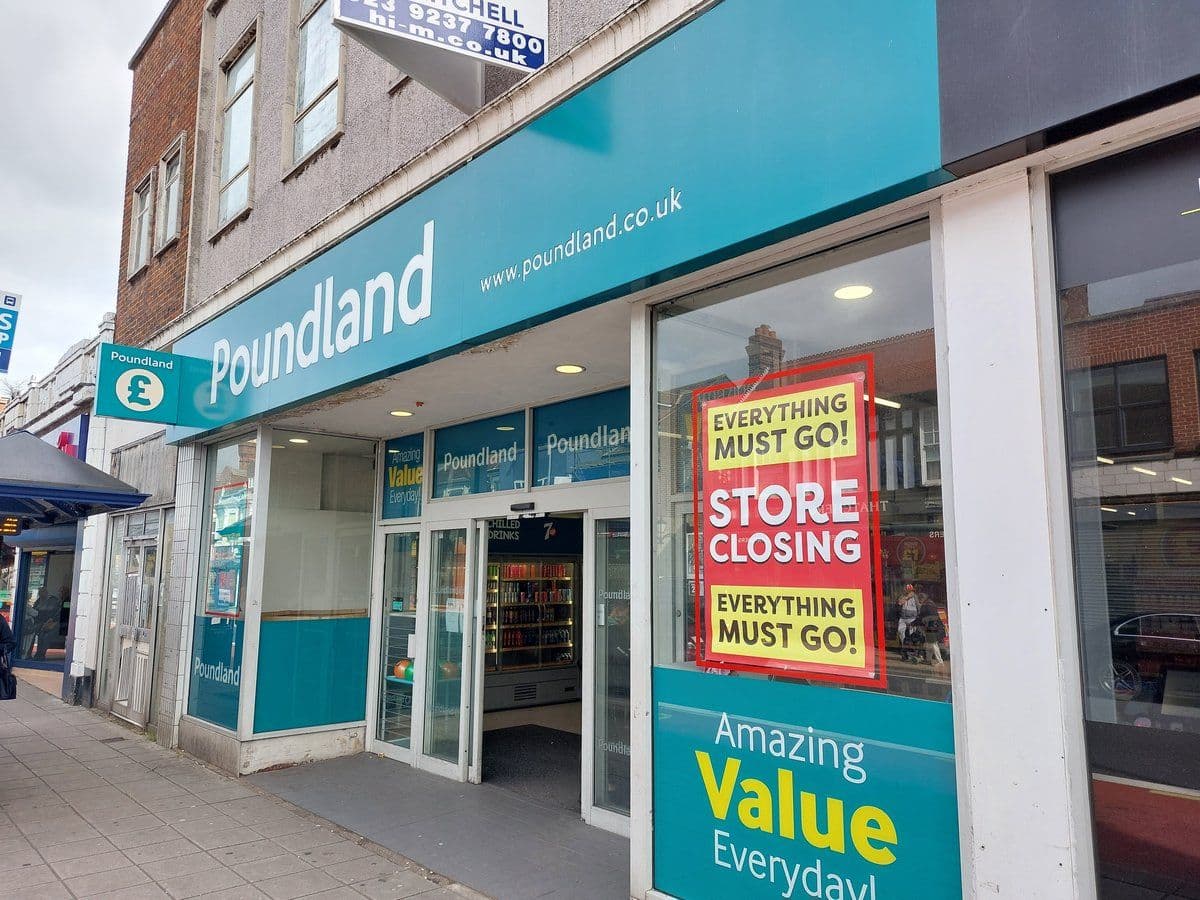
1. The Scale of the Poundland Store Closures Crisis
The Poundland store closures are not a minor correction. They represent the largest single restructuring of a UK discount retail business in recent memory. Here is what happened, in numbers.
Poundland Closure Headline Statistics (2024 to 2026)
| Metric | Data |
|---|---|
| Total stores before restructuring | 800+ across UK and Ireland |
| Target store count post-restructuring | 650 to 700 |
| Confirmed store closures | 149 |
| Jobs lost | 2,200 |
| Pre-tax loss in 2024 | £51 million |
| Revenue decline April to June 2025 | 10.3% to approximately €347 million |
| Like-for-like sales decline (Q3 2025) | 7.1% |
| Pepco Group impairment charge (2024) | €775 million non-cash impairment |
| Pepco Group net loss (2024) | €662 million |
| Sale price to Gordon Brothers | £1 (nominal) |
| Gordon Brothers investment commitment | Up to £80 million |
| Stock shrinkage losses (2024) | £44 million (up 30% in two years) |
| Head office roles cut | 100+ |
| Distribution centres closed | 2 (Darton, South Yorkshire and Springvale, Bilston) |
| Underlying profit (Q4 2025 recovery) | £17.3 million |
Key fact for retail leaders: Poundland contributed 33% of Pepco Group's total revenues but only 5% of Group EBITDA (pre-IFRS 16). It was generating enormous sales volume but almost no real profit. This ratio is a warning sign that can appear in any retail business running on thin margins with a growing cost base.
Store Closure Timeline at a Glance
| Period | Number of Stores Closed | Key Events |
|---|---|---|
| April 2024 | 1 (Swiss Cottage pilot) | Early closures begin |
| Late 2024 | Additional pilots (Chiswick, Southampton West) | Pepco reviews strategy |
| June 2025 | Sale to Gordon Brothers for £1 | Days from administration |
| August 2025 | 68 stores confirmed for closure | High Court restructuring plan sanctioned |
| October 2025 | Further closures proceed | Distribution centres begin shutting |
| December 2025 | 14 additional stores confirmed | Scotland and Northern Ireland sites included |
| January to February 2026 | Final wave of closures | Cameron Toll, Coatbridge, Portadown, Ballymena |
| Early 2026 | 149 total closures confirmed | Programme declared complete |
2. Poundland's History: How the Brand Was Built
To understand the Poundland store closures, you must first understand how remarkable the business was at its peak.
Poundland was co-founded on 25 April 1990 by Dave Dodd, Keith Smith, and Steven Smith in Sedgley, West Midlands. The starting capital was just £50,000, funded by a family loan. The first pilot store opened in December 1990 in the Octagon Centre, Burton upon Trent, and on its first day alone generated a turnover of £13,000 from 624 products. Several earlier attempts had been turned down by landlords who doubted the concept would work in the UK.
By the end of year one, Poundland had turned over £1 million.
Growth Milestones
| Year | Milestone |
|---|---|
| 1990 | Founded with £50,000. First store opens in Burton upon Trent |
| 1995 | Warehouse crisis as growth outstripped storage capacity; new 130,000 sq ft facility built |
| 1996 | Hong Kong office opened for product sourcing and supply chain |
| 2002 | Management buyout by Advent International for £50 million |
| 2003 | 100th store opens in Shirley, West Midlands |
| 2006 | 150th store opens. Annual profit of £4.1 million |
| 2008 | Expands aggressively during financial crisis at 3.7 stores per month |
| 2009 | 200th store opens. Annual profit £12.7 million |
| 2015 | Acquires 99p Stores, expanding footprint significantly |
| 2019 | Formally moves away from single £1 price point |
| 2024 | Pepco Group books €775m impairment |
| 2025 | Sold to Gordon Brothers for £1 |
| 2026 | 149 store closures complete; turnaround underway |
Between 2006 and 2009, Poundland delivered annual profit growth of 46% per year. Crucially, it grew fastest during the 2008 financial crisis, proving that value retail can thrive when household budgets tighten. This made the 2024 and 2025 collapse even more striking: when the cost-of-living crisis hit and household budgets tightened again, Poundland did not grow. It collapsed.
Why? Because by 2024 the business was no longer the same type of company it had been in 2008.
3. Poundland's Business Model: What Made It Work
For most of its history, Poundland operated what analysts describe as a high-volume, low-margin model. The mechanics were elegant in their simplicity.
How the Original Poundland Business Model Worked
| Element | How It Operated |
|---|---|
| Pricing | Single price point of £1 for all products. Zero price comparison needed by the shopper |
| Procurement | Bulk purchasing from manufacturers and wholesalers at volume discounts |
| Inventory | Standardised, simple product mix with predictable demand patterns |
| Supply chain | Centralised distribution through national and regional warehouses |
| Marketing | Low-cost, word-of-mouth driven by the simplicity of the proposition |
| Store design | Simple, low-cost store layout without premium fixtures or displays |
| Staff model | Lean staffing ratios suited to straightforward stocking and checkout |
| Customer relationship | Trust built on absolute price certainty and consistent availability |
The one-pound promise was not just a price. It was the organising principle of every single operational decision across procurement, inventory, store layout, and customer communication. When it disappeared, the entire operational system lost its coherence.
The single-price model simplified everything from inventory management to supplier negotiations. When every product costs the same to the consumer, the buyer's only variable is cost price and volume. This made Poundland an extremely disciplined and predictable business to run for over two decades.
Real-world example: When Asda tried to compete with Poundland in 2009 by reducing branded products like Colgate toothpaste to £1, Poundland's response was to introduce multi-buy offers, giving shoppers more quantity at the same price. This is the kind of agile, identity-confident response that a business with total clarity about its value proposition can execute. By 2024, that clarity was gone.
4. What Poundland's Mission and Motto Really Was
Poundland's mission, as articulated across its public communications, was:
To provide customers with exceptional value for money by offering a wide range of quality products at affordable prices. We strive to ensure that every customer who shops with us feels satisfied and receives great value for their hard-earned money.
The brand's informal motto was "Yes, Everything's £1" which became one of the most recognised retail slogans in UK high street history.
This was not just a marketing line. It was a brand promise that created:
- Trust among budget-conscious shoppers, particularly in lower-income communities
- Operational simplicity that kept procurement, warehousing, and logistics costs low
- Customer loyalty built not on a points scheme or rewards programme but on absolute price certainty
- Clear competitive differentiation from every other type of retailer on the high street
When the Advertising Standards Authority later banned Poundland from using the "Yes, Everything's £1" slogan because the claim was no longer accurate, it publicly confirmed to millions of shoppers what they had already begun to suspect: that the brand's defining promise had been broken.
Managing Director Barry Williams, September 2025: "We've reached a major milestone in converting the whole of our grocery aisle to a simple £1, £2 and £3 offer, reducing prices and focusing on the favourite items customers want us to bring them. But there's much more to do.
By 2026, the turnaround plan has reintroduced this clarity through the "Power of 1" campaign, with 60% of all products priced back at £1. The brand is trying to recover what it gave away between 2019 and 2024.
5. The Pricing Catastrophe: Abandoning the £1 Promise
This is the central failure. Everything else compounded it, but the abandonment of the £1 price point without a replacement narrative is the root cause of the Poundland store closures.
Why the £1 Price Point Was Dropped
The commercial rationale was understandable:
| Pressure | Impact on the £1 Model |
|---|---|
| UK CPI inflation peak of 11.1% (October 2022) | Sourcing costs for products rose sharply |
| National Living Wage increases year-on-year | Wage bill on 16,000 staff rose significantly |
| Energy cost spike post-2021 | Store operating costs increased across all 800 sites |
| Global supply chain disruption (post-COVID) | Procurement costs became less predictable |
| Landlord rent reviews | Property costs remained elevated in many locations |
The 1990 pound is now worth approximately 40p in real terms. Maintaining a strict £1 ceiling in 2024 was mathematically impossible without destroying margins entirely.
The real failure wasn't in changing prices, but in failing to build a new, compelling narrative around what 'Poundland' now stands for. -- FinTech News UK analysis, November 2025
What Happened When the Price Point Was Abandoned
The multi-price transition created a specific and damaging sequence of events:
Step 1: Products began appearing at £1.25, £1.50, and higher price points throughout the store.
Step 2: Shoppers noticed the inconsistency and began to compare Poundland prices with B&M Bargains, Home Bargains, and Aldi.
Step 3: Without the £1 guarantee, Poundland had no clear answer to the question: "Why should I shop here instead of there?"
Step 4: The Advertising Standards Authority banned the "Yes, Everything's £1" slogan, making the brand confusion official and public.
Step 5: Customer footfall declined, like-for-like sales fell, and the cost base (built for a high-volume, high-footfall model) was no longer covered by revenue.
Step 6: The spiral accelerated. Lower footfall meant lower volume. Lower volume meant loss of supplier negotiating power. Higher sourcing costs meant further margin compression.
Competitor Comparison: What Poundland Was Measured Against After 2019
| Retailer | Core Proposition | Price Range | Why It Was Winning |
|---|---|---|---|
| B&M Bargains | General merchandise and grocery | £0.50 to £30+ | Wider range, often lower on key lines |
| Home Bargains | Branded goods at discount | £0.49 to £25+ | Strong branded product offer |
| Aldi | Grocery with low prices | Variable, consistently low | Trusted low-price grocery anchor |
| Lidl | Grocery with low prices | Variable, consistently low | Quality perception improving |
| Temu (online) | Ultra-low-cost direct from manufacturer | Often under £1 | No physical overhead, extreme pricing |
| Poundland (2020-2024) | "Value" but with unclear pricing | £1 to £10+ | No clear answer post-£1 model |
Once Poundland entered the "unclear value" territory, it had no structural advantage over any of these competitors.
6. Inventory Management: Where the Cracks Appeared
Inventory management is the engine room of any retail business. For Poundland, it was also the clearest symptom of strategic confusion.
The Original Inventory Strength
The single-price model made inventory management comparatively straightforward:
- Every product was bought to sell at £1, meaning the maximum cost price was tightly constrained
- Procurement teams could concentrate purchasing power on fewer, higher-volume SKUs
- Demand patterns were predictable because the product range was standardised
- Working capital requirements were manageable because inventory turnover was high
What Went Wrong With Inventory
When Poundland expanded into multiple price points and new categories, the inventory model broke down:
Chilled and frozen food expansion: This required refrigeration infrastructure across hundreds of stores, cold chain distribution, and specific warehousing. The frozen and digital distribution centre in Darton, South Yorkshire, was built to service this category. When the category was scrapped as part of the 2025 restructuring, the entire facility closed, along with the associated jobs and operational complexity. The investment could not be recovered.
Clothing under Pep&Co: Poundland's own Pep&Co label initially performed well because it was designed for the Poundland customer: essential, affordable family clothing at clear low prices. When Pepco Group took over ownership of the clothing supply chain and began providing European-sourced ranges, the products lost relevance with the Poundland customer. Stock gaps appeared. Product lines did not match what shoppers expected. Sales collapsed in the clothing category.
A Pepco Group statement acknowledged that the sales struggles were "largely attributed to the retailer's shift in sourcing its clothing and general merchandise at group level." The new product ranges have struggled to meet customer expectations, with issues such as stock gaps and a failure to replicate the previous successful offering.
The result: By 2025, Poundland was carrying complex inventory across multiple categories, none of which was optimised for the operational model the business was built to run.
The New Inventory Model Under Gordon Brothers (2025 to 2026)
| Element | Previous Approach | New Approach |
|---|---|---|
| Pricing tiers | Multiple inconsistent points | £1, £2, £3 only |
| Grocery | Full range including chilled and frozen | Ambient-focused, no frozen |
| Clothing | Pepco Group-sourced European ranges | Relaunched Pep&Co, UK-designed |
| SKU count | High complexity, wide category spread | Simplified, fewer SKUs per category |
| Distribution | 4 centres including Darton and Springvale | 2 centres: Wigan and Harlow |
| Price distribution | Mixed | 60% of products at £1 |
7. Operations, Supply Chain, and Distribution Failures
The operational failures at Poundland tell the story of a business that expanded faster than its systems could support.
Distribution Centre Closure Impact
| Distribution Centre | Location | Purpose | Status |
|---|---|---|---|
| Darton DC | South Yorkshire | Frozen and digital fulfilment | Closed 2025 |
| Springvale DC | Bilston, West Midlands | National distribution | Closed early 2026 |
| Wigan DC | Wigan | General merchandise | Operational, absorbing volume |
| Harlow DC | Essex | General merchandise | Operational, absorbing volume |
The closure of two major distribution centres had a cascading effect on operations. Over 350 warehouse workers were directly affected. Stock redistribution to the remaining two centres required significant logistical planning during an already-turbulent restructuring period.
The Wilko Expansion Error
When Wilko collapsed in 2023 with the loss of over 400 stores, many retail observers saw the Wilko locations as a ready-made opportunity for Poundland to expand cheaply into prime high street positions. Poundland's management agreed, and a programme of converting former Wilko sites into Poundland stores was initiated.
Why this was a strategic error:
- The Wilko locations came with existing lease obligations that were often priced at pre-collapse, pre-inflation rent levels
- Many of the sites were in locations where Wilko had already been struggling with declining footfall
- Converting stores requires capital expenditure on fit-out at a time when Poundland's underlying business was already deteriorating
- Absorbing the operational complexity of dozens of new sites simultaneously stretched management attention away from fixing the core business
Taking over the locations of a failed retailer requires a robust strategy to avoid inheriting the same problems that led to the predecessor's demise. -- FinTech News UK, 2025
The outcome: Many of the Wilko-derived sites became among the first to be identified as "Class C or Class D" loss-making stores in the High Court restructuring plan.
National Insurance and Wage Cost Increases
The 2025 UK Autumn Budget increased employer National Insurance contributions and raised the National Living Wage. For a business employing approximately 16,000 people, these changes added millions of pounds to an already-stretched cost base.
A Poundland company spokesperson warned publicly that "changes to employer national insurance contributions would make things even more difficult for Poundland.
A business with stronger margins can absorb these costs through pricing or productivity. A business running on the thin margins of a £1 value retailer has almost no room to manoeuvre.
8. The Shoplifting Crisis That Drained £40 Million
One of the least-discussed but most financially damaging elements of the Poundland store closures story is the shoplifting epidemic that was quietly destroying the company's balance sheet.
Poundland Shrinkage Data
| Metric | Data |
|---|---|
| Annual stock shrinkage losses (2024) | £44 million (approximately €52 million) |
| Increase in shrinkage over two years | 30% |
| Violence against Poundland staff | Described as "accelerated significantly" in the past 18 months |
| Reduction in violence after body camera trial | 11% decline |
These numbers need context against the broader UK retail crime picture:
UK Retail Shoplifting Statistics
| Year | Recorded Shoplifting Incidents (England and Wales) | Year-on-Year Change |
|---|---|---|
| 2021/22 | Approximately 340,000 | Baseline |
| 2022/23 | Approximately 375,000 | +10% |
| 2023/24 | Nearly 444,000 (20-year high) | +29% |
| 2024 | Over 516,000 incidents recorded | +20% |
Source: UK Office for National Statistics and Get Licensed UK Retail Crime Report
UK retailers collectively lost £2.2 billion to theft in 2023/24, with a further £1.8 billion spent on security and £200 million on insurance, bringing the total annual cost of retail crime to £4.2 billion.
Poundland's situation was particularly acute because its model placed stores in high street locations serving lower-income communities, which carry statistically higher shoplifting exposure. The products were low-value individually, but the volume stolen at scale was devastating.
Poundland's Response
Poundland launched what it called its "biggest ever investment" in security measures:
- Motorola Solutions VT100 body cameras deployed to stores with the most significant crime rates
- Communication headsets for staff to coordinate rapid response to incidents
- Increased collaboration with local police forces
- Recruitment of undercover security guards
- Enhanced CCTV across the store estate
The body cameras alone drove an 11% decline in violence against staff in trial stores. But the investment in security is itself an additional cost burden on a business already struggling with margins.
9. Leadership Changes and Strategic Drift
The story of Poundland's decline is also a story of leadership instability at exactly the wrong moment.
Leadership Timeline
| Period | Leadership | Key Actions |
|---|---|---|
| 2017 to September 2023 | Barry Williams as Managing Director | Period of reasonable stability but pricing shift begins |
| September 2023 | Williams moved to Pepco Group; Austin Cooke appointed | New MD faces deteriorating business |
| 2024 | Cooke resigns after less than 18 months | Leadership vacuum at critical moment |
| Early 2025 | Williams returns to Poundland on interim basis | Crisis management begins |
| June 2025 | Gordon Brothers acquisition; Williams confirmed as MD | Restructuring formally launched |
| April 2025 | A dozen senior directors exit across retail, buying, digital, supply chain, and HR | Smaller, simpler leadership team put in place |
The Retail Gazette reported that those who exited in April 2025 included the head of retail excellence, director of digital, head of digital loyalty and engagement, and head of labour and productivity.
A Poundland spokesperson confirmed: "Around a dozen individuals left the business in early April as Barry put in place a smaller leadership team.
The leadership instability between 2023 and 2025 meant that at the precise moment the business needed decisive, consistent direction, it was navigating management transitions and strategic reviews simultaneously.
The marketing failure dimension: Industry analysis from The Drum highlighted that leadership changes had led to increasing focus on operational efficiency at the expense of customer-centricity. Marketing teams felt micro-managed. Local knowledge and customer insight were deprioritised in favour of centralised decision-making. The brand's voice weakened precisely when it most needed to be strong.
Marketing mustn't sit at the edge of a retail business. It is the business. Listening to customers. Shaping ranges. Telling stories. Celebrating what makes the brand unique. These aren't nice-to-haves; they're essential to staying relevant." -- The Drum, March 2025
10. The Digital Gamble That Failed
In the years leading up to the sale, Pepco Group identified digital investment as a strategic priority. The plan was to "leverage digital to drive customer engagement" and upgrade the core operating platform to build a "fit-for-future technology landscape."
In practice, this strategy failed on every front for Poundland specifically.
Digital Initiatives That Were Launched and Then Closed
| Initiative | Launch | Outcome |
|---|---|---|
| Poundland.co.uk transactional website | Expanded under Pepco ownership | Shut down entirely by late 2025 |
| Perks loyalty app | Rolled out nationwide | Scrapped within less than a year of nationwide rollout |
| Digital distribution from Darton centre | Built to support online fulfilment | Centre closed as part of restructuring |
Why E-Commerce Failed at Poundland's Price Points
The fundamental economics made e-commerce unworkable:
| Cost Element | Challenge for Poundland |
|---|---|
| Fulfilment per order | Economically unviable when average basket is £10 to £15 |
| Returns processing | Cost of processing returns often exceeds product value at £1 to £3 price points |
| Last-mile delivery | £3.99 to £5.99 delivery charges represent a 25% to 50% premium on a £12 basket |
| Customer acquisition | Cost per acquired digital customer cannot be recovered at low average order values |
As diginomica analysis noted, successful e-commerce carries a hefty price tag for retailers -- certainly more than a pound. Poundland's margin structure meant that every online order had the potential to generate a loss rather than a profit once fulfilment costs were deducted.
For comparison, Dollar Tree in the United States has sustained a value proposition at average unit retail of approximately $1.35, with 85% of items still under $2. But Dollar Tree built its digital capability incrementally and with explicit unit economics testing. Poundland attempted to build e-commerce at scale without the margin foundation to support it.
The lesson for B2B and retail leaders: Digital investment is not an automatic growth driver. It must be assessed against your specific margin structure and customer unit economics. A platform that works at an average order value of £80 will destroy value at an average order value of £12.
11. Financial Timeline: From €2bn Turnover to a £1 Sale
The financial deterioration of Poundland is one of the most dramatic in recent UK retail history.
Poundland Financial Performance: Key Data Points
| Period | Metric | Figure |
|---|---|---|
| FY2024 | Annual turnover | Approximately €2 billion |
| FY2024 | Revenue change vs FY2023 | Down 5.5% |
| FY2024 | Pre-tax loss | £51 million |
| FY2024 | Pepco Group impairment on Poundland | €775 million non-cash |
| Q3 2025 (April to June) | Revenue | €347 million |
| Q3 2025 (April to June) | Revenue decline | 10.3% year-on-year |
| Q3 2025 | Like-for-like sales decline | 7.1% |
| December 2024 | Pepco Group net loss (group-level) | €662 million |
| June 2025 | Sale to Gordon Brothers | £1 nominal |
| December 2025 | Underlying profit (Q4 recovery) | £17.3 million (doubled year-on-year) |
| December 2025 | Items sold | Up 2% year-on-year |
| December 2025 | Like-for-like sales | Down 2.9% (excl. discontinued categories) |
The Revenue Trajectory in Context
Poundland Revenue Direction (Indexed)

FY2022   ████████████████████████████████  (Peak)
FY2023   ████████████████████████████████  (Stable)
FY2024   ███████████████████████████████   (-5.5%)
Q3 2025  █████████████████████████████     (-10.3% quarter)

Recovery:
Q4 2025  ▲ Underlying profit £17.3m (first positive signal)
What this means for retail and B2B leaders: Revenue decline rarely announces itself dramatically. FY2024's 5.5% decline looked manageable in isolation. Combined with the cost structure, it was catastrophic. Monitoring margin, not just revenue, is the discipline that separates businesses that see the crisis coming from those that read about it afterwards.
How Poundland Was Classified Within Pepco Group
| Metric | Poundland Contribution to Pepco Group |
|---|---|
| Share of Group revenue | 33% |
| Share of Group EBITDA (pre-IFRS 16) | 5% |
This ratio tells the whole story. Poundland was generating one-third of the group's revenues but only one-twentieth of its EBITDA. It was consuming enormous operational resource for almost no financial return. Once Pepco deconsolidated Poundland, the remaining group's revenue grew 7.7% in the following quarter.
12. What Other UK Retailers Are Closing Simultaneously
The Poundland store closures did not happen in isolation. 2025 and early 2026 saw a wave of UK retail closures that collectively reshaped the high street.
Major UK Retail Closures 2025 to 2026
| Retailer | Number of Closures | Reason | Outcome |
|---|---|---|---|
| Poundland | 149 | Restructuring, lease exits, loss-making stores | Ongoing turnaround under Gordon Brothers |
| Select Fashion | 80 (entire chain) | Administration, no buyer found | Brand closed entirely |
| Homebase | 65 stores | Administration, new owners could not retain all sites | Reduced estate continues |
| River Island | 33 | Restructuring plan for financial improvement | Reduced estate continues |
| New Look | 15 UK stores + 26 Ireland | Exit from Ireland, UK restructuring | Reduced estate continues |
| Starbucks UK | 10+ | Cafe network restructuring | Reduced UK presence |
| Fired Earth | 20 | Administration in October 2025 | All showrooms closed |
| BrewDog | 10 bars | Refocus of hospitality division | Reduced bar estate |
| Hobbycraft | 9 | Announced April 2025 | Staff affected |
| Wilko | 400+ (2023) | Full administration | Brand acquired by The Range |
| Poundworld | 350 (2018) | Administration | Closed entirely |
Industry context from PwC: Britain saw 12,804 chain and multiple retailer store closures in 2024 alone, against approximately 9,002 openings. The net decline of -1.8% was actually an improvement compared to prior years, described by Jacqueline Windsor, head of Retail at PwC UK, as representing cautious optimism.
Zelf Hussain, restructuring partner at PwC UK, noted: "Although store closures declined in 2024 compared to the previous year, retailers continue to face significant challenges in 2025. While household finances are improving, consumer confidence remains cautious."
13. Key Lessons for Retail Owners, CEOs, and B2B Leaders
The Poundland store closures offer a master class in what happens when multiple strategic failures compound simultaneously. Here are the specific lessons that apply to your business regardless of your size, sector, or price positioning.
Lesson 1: Brand Identity Is Operational Infrastructure, Not Marketing Decoration
Poundland's £1 promise was the organising principle for procurement, inventory, store design, staffing, and customer communication. When it was removed without replacement, every other operational system lost its reference point.
Ask yourself: If your core value proposition changed tomorrow, which of your operational processes would break? If the answer is "not many," your proposition is probably not as embedded in your operations as it needs to be.
Lesson 2: Expansion During a Competitor's Failure Requires Discipline
The Wilko opportunity looked attractive in 2023. The locations were available, the brand had high street presence, and the physical footprint seemed strategically significant. In practice, those sites carried the legacy costs and footfall problems that had contributed to Wilko's own collapse.
Lesson for B2B suppliers: When a major retail client begins acquiring distressed competitor assets, reassess your supply exposure. Rapid expansion funded by distressed asset acquisition is a risk indicator, not a growth signal.
Lesson 3: Category Expansion Must Be Matched by Operational Capability
Chilled and frozen food required distribution infrastructure that Poundland's model was not built to support sustainably. The investment could not be recovered when the category was exited. Every category expansion decision must be assessed against the full operational cost, not just the potential revenue upside.
Lesson 4: Digital Investment Requires Margin to Sustain It
| Business Type | Minimum Average Order Value for Viable E-Commerce | Poundland's Reality |
|---|---|---|
| General merchandise | £40 to £60 | £10 to £15 |
| Fashion | £50 to £80 | Not applicable |
| Grocery | £60 to £80 (click and collect) | Not applicable |
| Value retail £1 to £3 | Economically very difficult to justify | £10 to £15 |
If your unit economics do not support the cost of digital fulfilment, loyalty programme management, and digital customer acquisition, investment in these areas will destroy margin rather than create growth.
Lesson 5: Data Latency Is a Strategic Risk
Former Pepco Group executive chairman Andy Bond admitted the company had been "too slow to react" to signs that shoppers were cutting back on spending. In operational terms, being too slow to react means the data existed but was not reaching decision-makers in time or in a usable format.
Operational intelligence delayed is operational intelligence denied. Store-level performance data that arrives weekly is useful for trend analysis. It is useless for preventing a loss-making store from burning through cash for another four months before anyone acts.
Lesson 6: Property Is a Lever, Not Just a Cost Line
The High Court restructuring plan was fundamentally a property negotiation. The entire financial viability of the business depended on exiting specific leases and renegotiating hundreds of others. Many of the closing stores were profitable on revenue but loss-making once rent, rates, and overhead were applied.
For retail leaders: When did you last conduct a full store-level or location-level profitability review using current cost data? Not annualised historical data, but costs as they stand today, after wage increases, after NI changes, after post-pandemic footfall recalibration?
14. Actionable Recommendations for Your Business
Based on the Poundland case study and the broader patterns visible across the UK retail industry, here are specific actions that retail owners, B2B leaders, and retail industry strategists should take now.
For Retail Business Owners and CEOs
-
Conduct a store or location profitability review using current 2025 cost inputs. This means applying today's National Living Wage, today's NI contributions, your current rent level, and post-pandemic footfall data to every site. Any site that is loss-making at current costs needs a plan within 90 days.
-
Audit your inventory for complexity versus margin contribution. List your top 20 and bottom 20 product categories by gross margin. If categories in the bottom 20 require specialised infrastructure (refrigeration, extended storage, specialist logistics), exit them unless there is a compelling strategic reason to retain them.
-
Define your value proposition in two sentences or fewer. If you cannot do this, your customers almost certainly cannot do it either. Clarity of proposition is a measurable commercial advantage in the current retail environment.
-
Review your technology stack for actual operational impact. As explored in our analysis of the SaaS stack tax on retail margin, many retail businesses are running multiple disconnected software systems that create data silos rather than integrated intelligence. Every platform that does not produce a measurable operational return is a cost, not an asset.
-
Model your digital investment against your unit economics before committing. This includes the cost of fulfilment per order, return rates, customer acquisition cost per digital shopper, and average basket value online versus in-store.
For B2B Leaders and Suppliers to Retail
-
Assess your exposure to any retail client contributing more than 15% of your revenue. The Poundland closure has disrupted supply relationships across hundreds of B2B businesses. Concentration risk is real and quantifiable.
-
Monitor your retail clients' property strategy. Rapid expansion through distressed acquisition is a risk indicator. Aggressive lease renegotiation is an early warning signal. A client reducing their store count by 15% to 20% is also reducing the volume of stock they need from you.
-
Understand your clients' margin structure. A retailer running on 3% to 5% EBITDA margins has no buffer for external shocks. A supply relationship with that client is fundamentally exposed to external events that your client cannot absorb.
-
Build scenario models for order volume reduction of 20%, 40%, and 60% from any single large retail client. Knowing your break-even point at each level means you can respond operationally rather than reactively.
For Retail Industry Leaders and Strategists
-
The mid-market is the danger zone. As this mid-market retail growth analysis highlights, the UK consumer is increasingly polarising toward either extreme value or genuine premium, with the undifferentiated middle being hollowed out. Poundland sat in a dangerous position: it had left its extreme value identity without successfully establishing a new one.
-
Cost reduction buys time but does not build growth. Barry Williams' own words: "No sustainable turnaround can be based on cost management alone." Cutting underperforming stores, renegotiating leases, and simplifying inventory create the financial platform. The growth must come from a compelling, differentiated offer that brings shoppers back.
-
Operational simplicity is a competitive advantage at scale. The businesses winning in UK value retail right now are B&M Bargains and Home Bargains, both of which maintain tight operational discipline, limited category complexity, and clear price positioning. Simplicity, maintained with discipline, compounds over time.
15. How Data Integration Is the Real Solution for Retail Growth
There is a thread that runs through every element of the Poundland store closures story: the absence of real-time, integrated operational intelligence at the moment decisions needed to be made.
Consider the specific data failures visible in this case:
| Decision Point | What Data Was Needed | What Appears to Have Happened |
|---|---|---|
| Pricing transition away from £1 | Real-time customer price sensitivity by product and location | Transition executed without adequate customer response modelling |
| Wilko site acquisitions | Site-level profitability forecasting at current cost inputs | Expansion proceeded without adequate stress-testing |
| Chilled food expansion | Full distribution cost modelling including infrastructure investment payback | Investment made without sustainable margin model |
| Perks loyalty app | Customer acquisition cost versus lifetime value at £1 to £3 price points | Launched and scrapped within a year |
| Store-level performance | Weekly or daily visibility of margin by site | Andy Bond admitted being "too slow to react" to declining performance |
| Supplier negotiations | Real-time cost-of-goods data integrated with pricing decisions | Category complexity outpaced procurement system capability |
These are not failures of intelligence or intention. They are failures of data infrastructure. The information needed to make better decisions existed or could have existed. The systems to surface it, connect it, and present it to decision-makers in time were not in place.
What Integrated Data Infrastructure Looks Like in Practice
For a retail or B2B business, integrated operational intelligence means connecting:
- Store or channel-level performance data updated daily, not monthly, with cost inputs recalculated in real time
- Inventory and demand data linked to supplier cost data so that margin is calculated at the point of procurement, not discovered at the end of a quarter
- Customer behaviour data connected to inventory decisions, so that what shoppers are buying (and not buying) shapes what the buying team sources
- Supplier relationship data that flags concentration risk, lead time changes, and cost variations before they affect the shelf
- Property and lease data that models site-level profitability dynamically as input costs change
This is not a theoretical framework. It is the operational capability that the retailers who are growing in 2025 and 2026 have built. As explored in our retail growth engineering overview, the difference between retail businesses that are growing and those that are closing is increasingly a data and decision-making infrastructure gap.
The businesses that will grow through this period of retail restructuring are the ones that build operational intelligence before they need it in a crisis. The Poundland case is a reminder of what it costs to build it after.
The Road Back: Is the Poundland Turnaround Working?
The early signs from the Gordon Brothers turnaround are cautiously positive:
- Underlying profit of £17.3 million in Q4 2025, compared with losses in the same period a year earlier
- Items sold up 2% year-on-year in Q4 2025
- 60% of the product range restored to £1 pricing
- Pep&Co clothing relaunched with product designed specifically for the Poundland customer
- Store estate rationalised to between 650 and 700 locations, all subject to profitability review
- Two major distribution centres closed, reducing fixed overhead
- Leadership team simplified to a smaller, more operationally focused structure
Barry Williams, Managing Director, January 2026: "We have clear indications from the work we've already done that we're on the right track. While there's been significant progress as we re-focus and re-energise the business with lower prices and a sharper offer, we know we still have much to do. No sustainable turnaround can be based on cost management alone."
The £80 million investment from Gordon Brothers and the court-approved restructuring plan have bought time. The question now is whether Poundland can rebuild the customer trust, supplier relationships, and operational simplicity that made it a British retail institution in the first place.
The answer will depend on data, discipline, and the clarity of proposition that the business is only now beginning to recover.
Final Summary: What the Poundland Store Closures Teach Every Retail and B2B Leader
| Failure Category | What Went Wrong | What Your Business Should Do |
|---|---|---|
| Brand identity | Abandoned £1 promise without a replacement narrative | Define your value proposition clearly and protect it operationally |
| Pricing strategy | Multi-price transition confused shoppers and eroded competitive positioning | Any pricing change must be accompanied by a new customer narrative |
| Inventory management | Category expansion outpaced operational capability | Every new category must be stress-tested against your distribution and margin model |
| Digital investment | E-commerce launched without viable unit economics | Model customer acquisition cost and fulfilment cost before committing |
| Property strategy | Wilko expansion added cost during deterioration | Stress-test acquisitions against current cost structure, not theoretical upside |
| Data systems | Too slow to react to declining performance | Build real-time store and supplier data visibility before you need it in a crisis |
| Leadership stability | Three MD changes between 2023 and 2025 | Operational continuity is a strategic asset, not an HR matter |
| Shoplifting | £44 million lost annually to shrinkage | Location selection and security investment must be modelled as margin costs |
Grow Your Business With Integrated Data and Operational Intelligence
The Poundland story demonstrates that the gap between a thriving business and a collapsing one is rarely about ambition or effort. It is almost always about whether the right information reaches the right decision-maker at the right time.
At Growsights, we work with retail businesses and B2B operators who are facing exactly the pressures described in this article. We build integrated data and growth solutions that connect store-level performance, inventory intelligence, supplier cost data, and customer behaviour into a single operational view, giving your leadership team the visibility to act before challenges become crises.
Whether you are a retail CEO reviewing your store portfolio, a B2B supplier assessing your exposure to retail clients under pressure, or a retail industry leader thinking about how to position for the next five years, the conversation starts with understanding where your data blind spots are.
Explore how we work, discover who we typically partner with, and when you are ready, start a conversation with us.
The businesses that grow through this period of retail restructuring are the ones that invest in operational intelligence before the crisis arrives. The Poundland case study is a very clear picture of what happens when that investment comes too late.
Research sources: Pepco Group quarterly and annual results statements, Gordon Brothers acquisition announcement, UK High Court Part 26A restructuring plan documents, PwC Store Openings and Closures data, Retail Gazette, The Grocer, diginomica, FinTech News UK, Forbes Burton, The Drum, and Office for National Statistics crime statistics. Data current to May 2026.
Published by Growsights | Retail Intelligence and Growth Engineering | Point of View